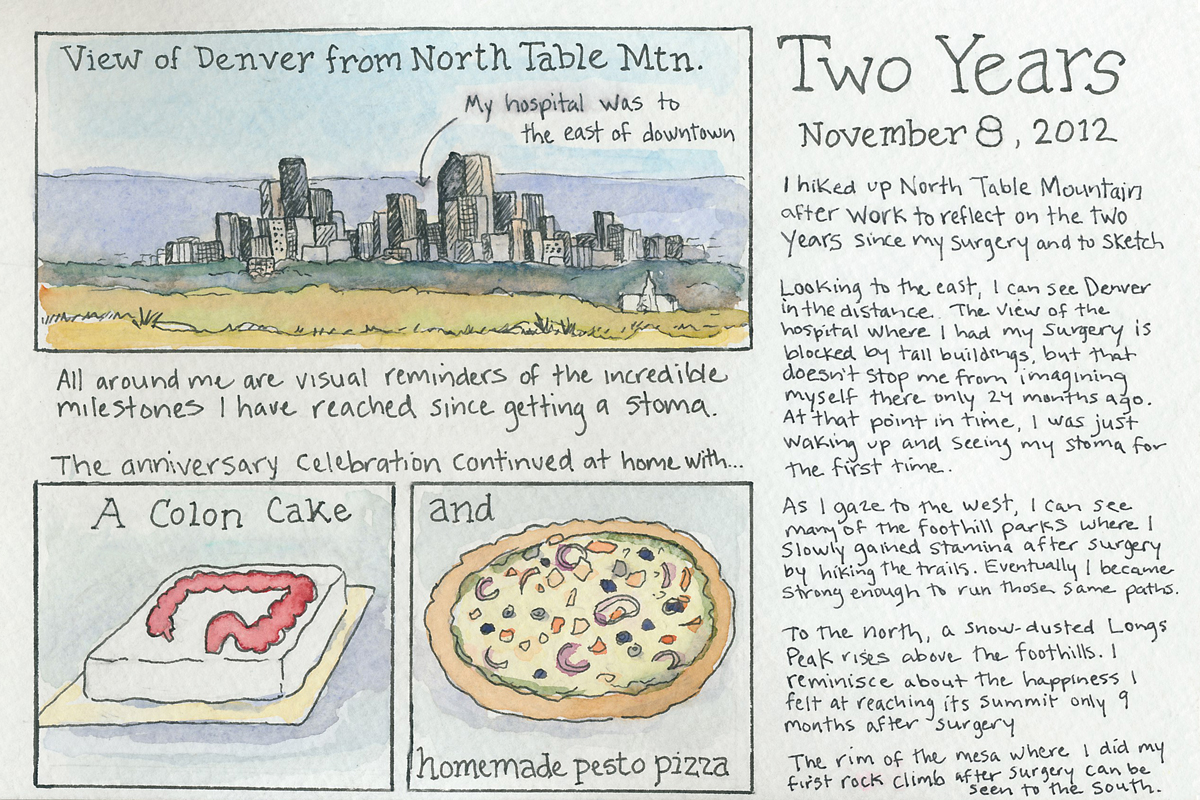
November 8th marked the two-year anniversary of my ileostomy surgery. It had been a hectic week, and I was in the mood for some quiet reflection time. I climbed a mesa near town, took in the scenery, and sketched and wrote in my journal.
As great as it was to quietly contemplate my two-year stoma anniversary on top of the mesa, something more festive was definitely in order. Once I got back home, I threw a little party with Doug, complete with homemade culinary delights: chicken pesto pizza and a cake decorated like a colon.
Looking back, I am still in awe that it has already been two years. In those initial months after surgery, time crawled by slowly and every bit of my attention was focused on healing and getting used to the changes to my body. I thought of nothing but my ostomy and appliance. Now all those hard times seem to have gone by in a flash. My stoma has become part of me, and large portions of the day go by when I don’t think about it at all. When I do think about it, it is often with a feeling of gratitude. It may sound crazy to say I love my ostomy — but I really do. This day marked a special anniversary, but everyday is a celebration of the health my stoma has given back to me.
Celebrating my two-year surgery anniversary. It is hard to not look at the cake and map out all the areas where I had colon inflammation over the years. I chose the cecum for my first piece of cake. 🙂
In approaching the two-year anniversary of my ostomy surgery, I was looking back at an email I wrote to Doug from the hospital during my final severe UC flare. A few days before writing it, I had received my very first infusion of Remicade. It had worked wonders to get my symptoms under control, but I did not want to take such a potent drug for the rest of my life if it could be avoided. I was strongly leaning towards pursuing surgery once I got out of the hospital and wasn’t so sick and weak (a decision that became much clearer when side effects of the drug became more than I could bear). Even though I was quite confident that I wanted surgery, I was still scared of getting an ostomy due to the horror stories I read on the internet–especially the ones that revolved around leaks. I had just read a worrisome tale on the web when I sent this message:
October 2, 2010
Doug,
This all sounds so complicated and overwhelming. I DON’T want to be infused with drugs the rest of my life but this sounds so hard too. What if I can’t find a way to go climbing or backpacking without creating a leaky poopy mess? Are you confident we will be able to figure this all out together without getting fed up? Maybe it feels different when someone faces surgery in an absolute emergency, but I am choosing this aren’t I? Need some reassurance.
-Heidi
Despite the fears, I knew in my heart that surgery was the route I wanted to take to treat my ulcerative colitis. I met with my surgeon and was then scheduled to meet with my “wound, osotmy and continence nurse” (WOCN). I had lots of questions for her, including several about leaks. She assured me that once I found the products that worked for me, leaks should not be an issue. I liked that answer, but I wasn’t sure I believed it. From all the things I read, leaks just seemed like a given with an ostomy. After my surgery, I stocked my car with spare pants, put waterproof pads on the bed when I slept, and bought a collapsible wash basin to wash potentially poopy clothes on future backpacking trips.
It didn’t take long to experience my first leak. Shortly after I got home from the hospital, wound drainage got under my wafer while I was sleeping and broke down the adhesive. Though not a huge disaster, a little bit of stool did escape. I had been using a strip paste right around the opening, but it did not adhere to my skin well. I decided to set up an appointment with my WOCN to see if she could troubleshoot my problem. After hearing about what happened, she left the room and came back with something that looked like a flat donut made out of Silly Putty. It was called a barrier ring. She showed me how to put it on, gave me a few extras, and told me how to order more. I left the office hoping for the best.
So how long was it until the next leak? It has been almost two years since that appointment and I have yet to get another one. My nurse was absolutely right when she said finding the right products is crucial. For me, a barrier ring was all I needed to become confident that output would not seep out from under my wafer. Whenever people mention leaks, the first thing I ask them is if they have tried a barrier ring.
Barrier rings come in many different brands. The first one I tried was an Adapt Ring by Hollister. I used these for four months and liked them a lot. However, I later tried an Eakin Cohesive Seal by Convatec and found that they were more resistant to erosion from my output and stuck to my skin very well–almost melting onto it. Some people don’t like this because the residue is hard to remove. However, that stickiness is exactly what makes them work so well for me; nothing gets beyond the Eakin. I also tried a ring by Coloplast, but so far, the Eakin Cohesive Seals are my personal favorite. Everyone is different, so it pays to try every brand to see which is the best fit for you.
The other thing I love about barrier rings is how well they protect my skin. Wilbur, my stoma, is an active guy. He wiggles, dances and expands and contracts a lot. To leave room my stoma’s gymnastic routines, I cannot cut my wafer too close to it and need to leave about 1/8 inch of my skin exposed. A barrier ring swells up to fill in this space. At first I was a little shocked by how much the barrier ring turtlenecked around my stoma when it was exposed to moisture, but I soon realized that this is exactly what they are designed to do in order to protect the parastomal skin.
The following photos show my favorite way of attaching a barrier ring. This method minimizes the chances of getting the ring wet which allows it to stick to the skin very well. Along with using a barrier ring, I change my appliance every 3-4 days. Beyond that time frame, my Eakin Cohesive Seals erode and leave my skin exposed.
The barrier ring I use: the Eakin Cohesive Seal.First, I stretch the hole in the ring to match the size of my stoma. Then I tear one side. (Yes, it appears a manicure might be in order… rock climbing is hard on the fingertips).After drying off my skin very well, I hook the ring around my stoma.I then press the torn edge back together.Finally, I place the wafer over the barrier ring. You can see the 1/8″ space around my stoma and how the ring fills it in. Within an hour, moisture will cause the ring to swell and turtlneck up the side of the stoma about 1/4″. This keeps output from seeping under my wafer while also protecting my parastomal skin. (See the Skin Sleuthing post to read about the taping method pictured).
Nowadays, the spare pants sit unused in the car (well except for the one time they came to the rescue when I dropped my tail and spilled output all over my trousers), the package of waterproof pads is gathering dust in the closet, and I have not had to do laundry on any backpacking trip. It doesn’t matter whether I am climbing in 95-degree temperatures, snowboarding in the frigid cold or swimming at the pool. I always feel confident that my appliance will not leak during any of my activities when I use a barrier ring. Even in the rare instances when my wafer has peeled up, my barrier ring has always held tight and maintained the seal.
So if you are having leaks and haven’t tried a barrier ring, I highly recommend getting a sample and giving it a go. If the ring doesn’t prevent your leaks, meet with a WOCN and see if they have any other recommendations. Talk with other people with ostomies on the internet or at local ostomy support groups and find out what they suggest. With the right products, leaks with an ostomy shouldn’t be a given; they should be the exception.
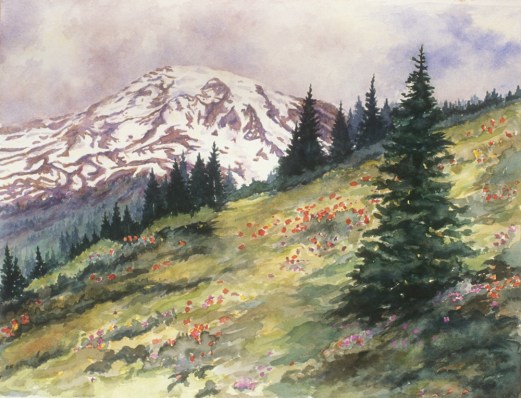
I have a brand new goal to work toward for next summer: a climb of Mt. Rainier (14,411 feet) in Washington’s Cascade Range. Ever since Doug and I backpacked on the lower forested flanks of Mt. Rainier on the Wonderland Trail when we were in college, I have wanted to try the peak. Doug and I had talked of doing it a couple years ago with his Dad, but my illness and surgery delayed those plans. I am ready to dust off this dream, and the three of us will finally give it a go.
A painting of Rainier that I did in 2003. Can’t wait for my adventure there next summer! Copyright 2003 Heidi Skiba.
Though Doug and I rock climb a lot, we do not have experience on peaks with large glaciers (and Rainier is the most heavily glaciated mountain in the Lower 48). We know it would be too dangerous to try Rainier on our own. Therefore, we will be doing the ascent with a guide service, International Mountain Guides (IMG). This company leads mountaineering trips all over the world and has some of the best guides in the business.
As it turns out, one of the owners of IMG, Phil Ershler, has Crohn’s disease. He and his wife, Susan Ershler, wrote the book Together on Top of the World. The book describes Phil’s challenges with Crohn’s disease and colon cancer and tells the story of the couple’s journey to climb the highest peak on each of the seven continents despite these odds. I went to see Phil and Susan speak in-person in Boulder shortly after they released their book in 2007. This was roughly a year after I had been officially diagnosed with ulcerative colitis, and I was scared of what my recent diagnosis might mean to my outdoor adventure-filled life. Their words gave me much hope. I read their amazing book shortly after hearing them speak and was further inspired.
As we started to research our climb with IMG, I emailed Phil to find out if he felt that any of the Rainier trips were feasible with my ostomy. The last thing I wanted to do was get excited about a trip only to find out I might be denied due to my medical condition. I was candid about the extra challenges I now face after ileostomy surgery, but Phil was very encouraging and suggested the route he thought might work out the best. He also warned me that Rainier trips fill very quickly and to get our application in as soon as the 2013 dates were published.
He wasn’t kidding. We knew the trip dates would be published while we were on our climbing road trip, so we were driving into town from our camp every other day to find a place to connect to the internet and check. Turns out the dates were published on the one day we didn’t get to town. By the time we checked the following day, there was only one trip left with three openings during the month-long window of time we wanted. Thankfully we secured our spots!
Before being officially accepted on the climb, the guide service emailed me with more specifics on the route so that I knew what I was likely to face on the mountain. Among several challenges, the ascent to high camp involves carrying a 40-pound pack for five miles with 5,000 feet of elevation gain. The final day of the route includes a five- to six-hour ascent to the summit and then a descent all the way to the trailhead. This means a round-trip travel time for that day of up to 16 hours. I had been very open on my application paperwork about my ostomy and the challenges it can present (such as dehydration and my limitations of carrying super heavy loads). The staff wanted to make sure the conditions of the climb seemed doable to me. IMG was super accommodating and helpful about it all and explained some steps I could take to help meet my hydration and pack-weight needs within the confines of the trip. They were even set up to deal with my gluten-free diet.
After carrying a 40- to 55-pound backpack on several trips since surgery, I was sure that I could handle the load on this climb–especially with time for additional training. Just as I carried extra water on some long all-day climbs this summer, so I would on Rainier. I already had a lot of experience swapping out my ostomy pouches in frigid temperatures and with a harness on. I had no concerns about that part of things. I was sure the climb was within my abilities, but I also had to get signed forms from my regular doctor and surgeon stating that they approved of my participation. After outlining the specifics of the trip to them, neither had any reservations about me taking part in the climb. I was set to go!
It is just starting to settle in that I am actually going to be attempting Rainier. I can’t describe the excitement I am feeling for this adventure. The route that was recommended to me is the easiest one that IMG uses on Rainier. It is a three-and-a-half day trip starting at a beautiful place called Paradise (5,400 feet). We will carry our loads to Camp Muir (10,080 feet) and then move on to a higher camp at the Ingraham Glacier the following day. On the final day of the trip, we will attempt the summit (conditions permitting) and descend to the trailhead. Pack weights are less on this route than most others because some group gear is kept at the already-established camps.
I have to admit that I was really drawn to do one of the longer or more remote Rainier trips described on IMG’s site like the Emmons Glacier climb or even a six-day seminar that includes a lot of technical skill instruction plus an ascent of the peak. In my mind, I am still the woman who has gone on several 30-day backpacking and mountaineering trips into the remote wilderness carrying 75 pounds of gear on my back, but I have to acknowledge that my body has changed since then. I am still learning what it is capable of after surgery and this trip will be a perfect test. I am fully confident that it will be strong enough for this route, and after that, who knows? Maybe I will want to do a longer or more difficult trip on Rainier or another peak down the line. Right now, I am ecstatic to have the chance to take part in this climb.
Happy World Ostomy Day, everyone! Today I will be celebrating by heading to work and having a wonderfully ordinary day. After all, when I was recovering from surgery, I couldn’t wait to return to my job as a park naturalist. Right after my operation, life revolved around getting used to living with my new stoma. Being back at work allowed me to focus on something else and helped me see that life would indeed feel normal again. Returning to my job also made me incredibly thankful for my surgery. I remember quietly breaking into tears in my office after leading my first few hikes because I was so happy and grateful to be doing what I loved again.
As the list of things that my ostomy allows me to do again grows, so does my passion for showing what is possible after surgery. I am always excited to help spread the word about this life-saving surgery — not just on this special day, but every day.
So join me in celebrating World Ostomy Day. If you or one you love has an ostomy, help spread the word by sharing your story with someone today. Together we can educate others and end the stigmas!
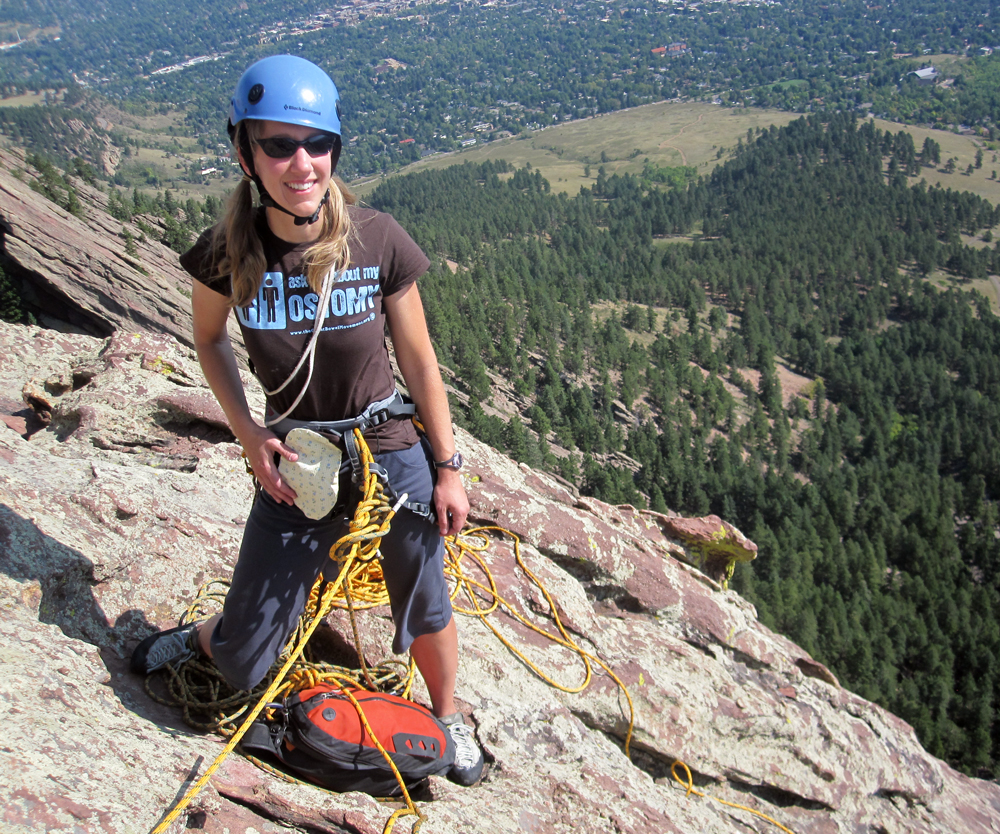
Spreading ostomy awareness while climbing the Third Flatiron in Boulder, CO in August 2012.
When Doug and I became a couple during college, our very first group purchase was a spatula. We were heading out on a camping trip and realized we would have no way to flip the pancakes we were making for breakfast the next day. We stopped at a grocery store en route to the park and pooled our funds to acquire the best turner that $1.99 could buy.
Our next group purchase was a bit more substantial — a slightly beat-up 1985 Toyota 4×4 truck. The lakes of northern Wisconsin, wilderness of Michigan’s Upper Peninsula, and craggy climbing areas outside of Madison were calling us, yet we had no reliable way of getting there. The truck became our key to adventure. Every weekend we would load it up and head out to the wilds. During a couple of college summers we hit the open road of the western United States for months on end — living out of the back of the pickup and stopping at every climbing area we could find along the way. Those weeks of roaming freely and opening the map each day to decide where we wanted to go next provided some of our most beloved memories together.
One of the things I longed to do most after surgery was to go on a climbing road trip again. I wanted to remember what it felt like to climb all day, cook up dinner at camp, talk about the day’s adventures over a crackling campfire, and then get up to do it all again the next day. Last summer, I wasn’t quite strong enough to rock climb. After training and gaining strength over the winter, my body finally felt ready to spend day after day doing climbing routes. In the beginning of September, Doug and I set out on a 17-day adventure that would include a week of climbing at City of Rocks in Idaho and several days of climbing at Smith Rock in Oregon. While in the Northwest, we also planned to spend time with some good friends who lived in Bend, as well as meet up with my parents for some sightseeing.
As we were traveling and climbing, I noticed that quite a few things had changed since our road trip days long ago:
There is now something called the internet. In our college days, I carried a small leather address book and actually wrote to my friends on paper while on the road.
Cell phones have replaced pay phones. We used to have to to load up our prepaid calling cards and look for a pay phone to let our parents know we were still alive. Now we just searched around Almo, Idaho, until we discovered the cell phone reception sweet spot. (It was pretty good at the northern-most table on the patio of the Rock Stop general store.)
Our trip food budget expanded to include things other than rice and ramen noodles. Though we still cooked most of our meals on this vacation, it was nice to have enough funds to enjoy the food and drink at some of Bend, Oregon’s great brewpubs with our friends.
We looked at some of the climbs we did at these areas in our early 20s and wondered how we had the nerve to get up them.
Our truck has been replaced by a tiny, fuel-efficient Toyota sedan. It is amazing how much camping and climbing gear we squeezed into that little rig. However, we did bottom out on some three-inch-tall rocks on Idaho’s back roads.
I now had an ostomy.
It was easy to forget about this last big change because things felt so much like they had in the past before I had gotten sick with UC and before I had surgery. I was just out there having fun and my stoma did not diminish the joy of a road trip one bit. Other than changing or emptying my appliance, or having to drink extra water to prevent myself from getting dehydrated, I hardly thought about my ostomy at all. It proved to be no trouble during long days on the road, while living in camp or while climbing long routes.
We shot a lot of footage on our road trip and will be putting together a video about the adventure soon. Until then, the following photos share some of the great times Doug and I had on the trip.
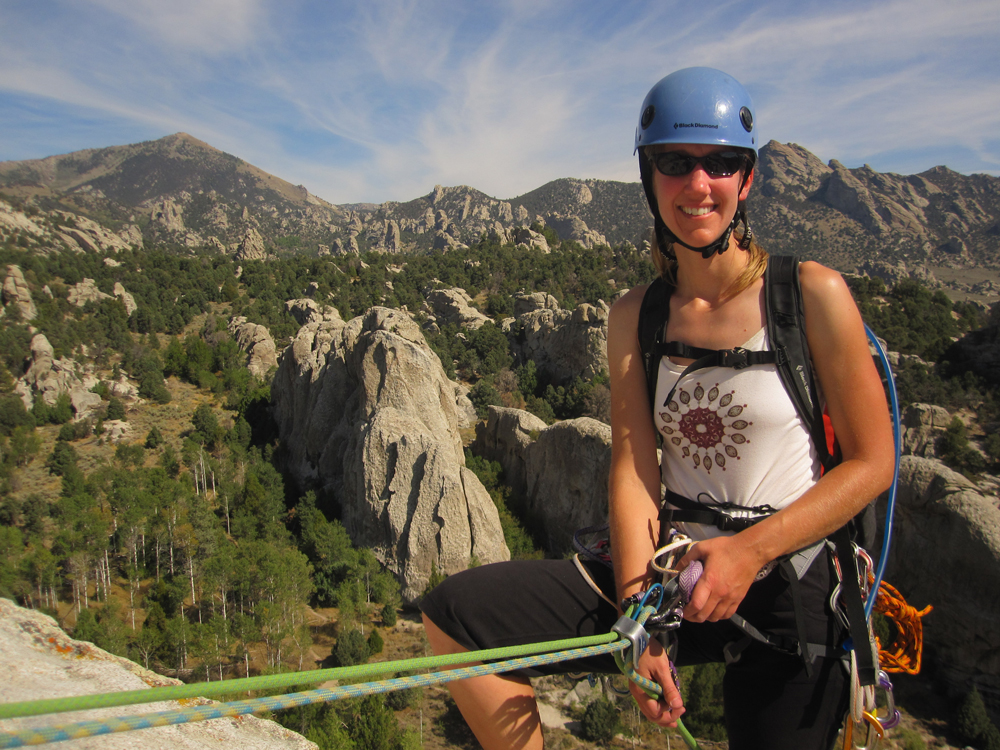
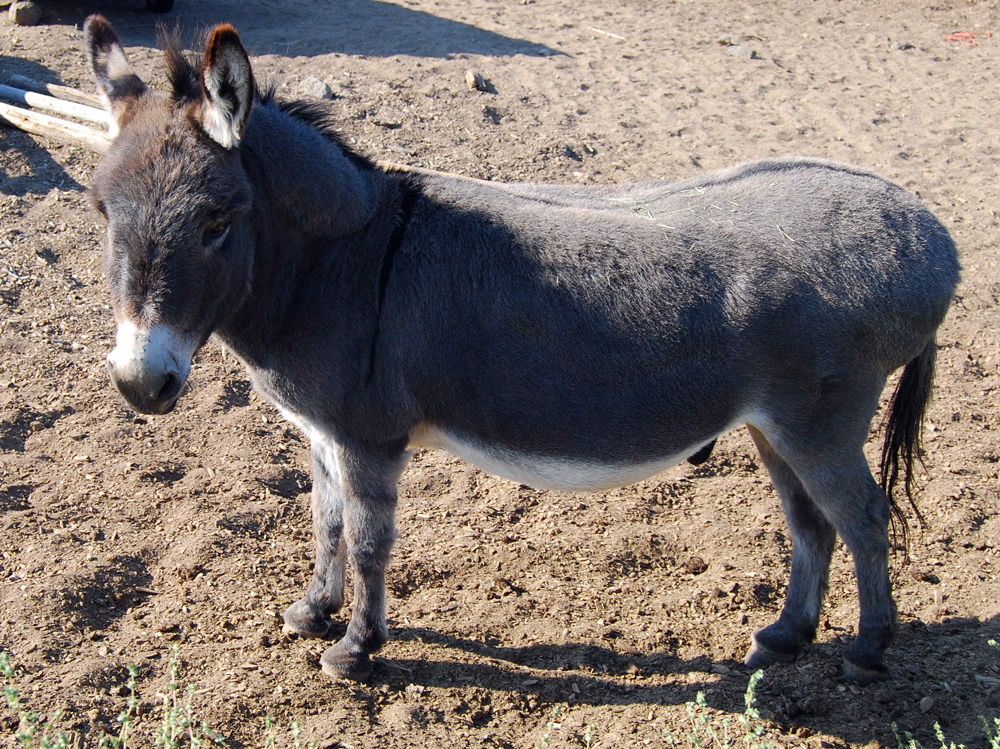
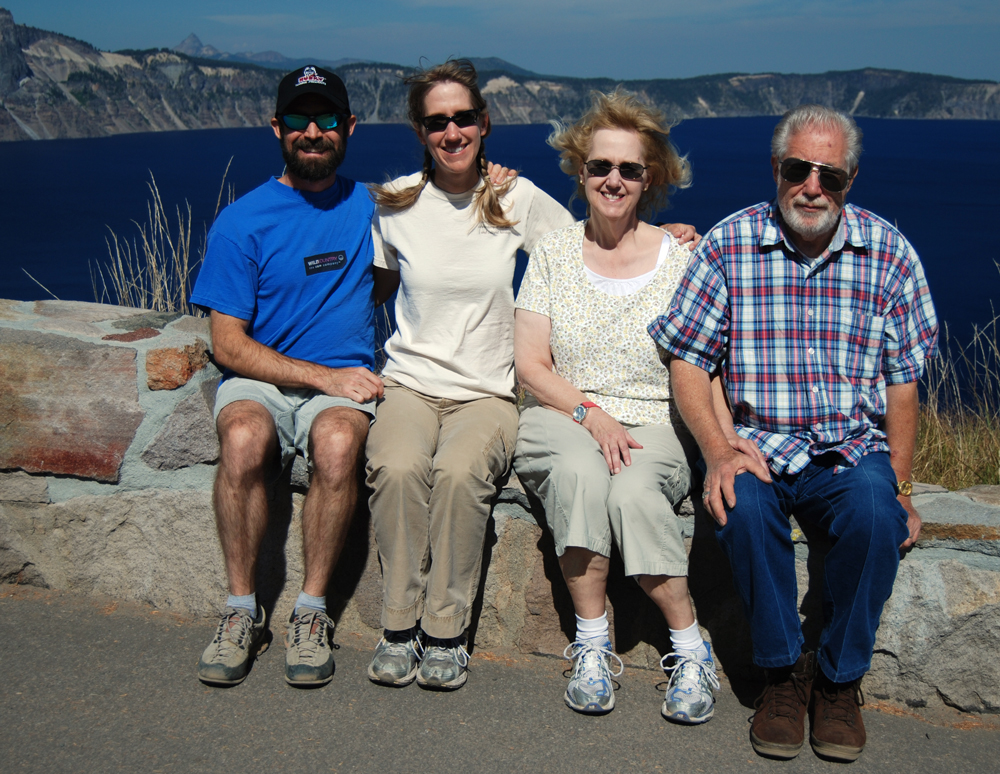
Climbing Theater of Shadows on Jackson’s Thumb at City of Rocks. This was my very first lead climb after surgery.Rappelling off of a route at City of Rocks in Idaho.Our very cool campsite at City of Rocks.Sketching at camp.I love donkeys. We encountered this cutie while walking near our friends’ house in Bend, OR.Showing off a fresh wound after a full day of climbing at Smith Rock, OR.Enjoying the McMenamins salt-water soaking pool in Bend, OR.Spending time with my parents at Crater Lake.Exploring the mile-long Lava River Cave near Bend, OR.No road trip is complete without at least one stop at a giant roadside sculpture. Doug and I getting silly during a major windstorm at the huge Conestoga wagon near John Day, OR.
The September 2012 issue of The Phoenix, the official publication of the United Ostomy Associations of America, features a new column called Ostomy Outdoors. It is authored by none other than Heidi, who shares a bit about her post-surgery trail running experience.
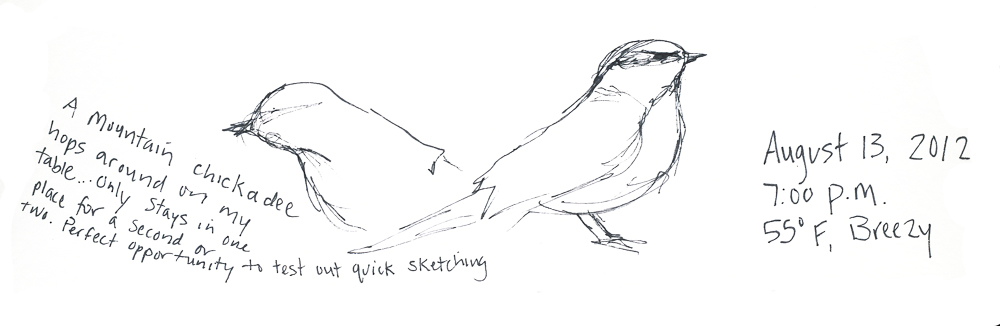
My pencil skirted across the paper as I quickly tried to capture the pose of the mountain chickadee hopping across my campsite picnic table. The resulting shape barely resembled the lively little bird in front of me, but I didn’t care. I was happy for the quiet moment and the chance to draw.
A mountain chickadee kept me company during dinner and was the perfect subject for practicing quick drawings.
This uninterrupted block of drawing time was part of a two-day nature journaling course that I took a couple of weeks ago with the Rocky Mountain Nature Association. My days were spent sketching and doing journaling exercises at various locations in the park with artist Sherrie York, whom I greatly admire. I soaked up the inspiration each day and couldn’t wait to get to camp in the evening to spend more time practicing what I had learned. There, I took out my journal and watercolors and filled more pages with writings and drawings of my chickadee visitor, the boulders near my tent, and even my marshmallow-roasting campsite neighbors. As the sun dipped behind the mountains and my hands got chilly, I reluctantly put away my sketchbook. It had been far too long since I had a chance to spend this much time drawing, and I didn’t want to stop. Art had once been such a big part of my life. Now things were so busy that I hardly had a chance to pick up my pens and paints. Even my instructor had commented that it had been a long time since she had seen something posted on my art blog.
Journaling at the Hidden Valley area of Rocky Mountain National Park.
So how does this all relate to my ostomy? I have read discussions on forums regarding the extent to which an ostomy defines one’s self. Some say that their ostomy has made them who they are. Others say that they refuse to let their ostomy define them. For me, my ostomy has absolutely been a defining force in my life. Going through the experience has made me a stronger, more appreciative person and has given me purpose. I love showing what is possible after surgery and helping to give hope to those who are facing or recovering from ostomy surgery. It is hard to imagine my life without this new-found focus. Helping others through my Ostomy Outdoors blog is one of the most rewarding things I do.
On the other hand, I really need those moments when I am not thinking about my ostomy at all. Those times when life is about my family and friends, career, travels and other adventures. Those times when I am sketching in my journal or inking up a linoleum or wood block and rolling it through my printing press.
My printing press is starved for an inky block.
So yesterday I spent the daylight hours cleaning up my art studio. A block printing project I started before surgery sat coated in a layer of dust, and my art table had become a place to stack my boxes of wafers and pouches. Now that my space is straightened up, I am going to commit to working on art at least once a week–hopefully more.
Yikes- this mess might be okay if I was drawing a still life of ostomy supplies, but since I am not, it only interferes with my creativity.Much better!
This may mean that there will be time periods when a week or two might go by without a post or when it may take me a few days to answer an email. Know that every message or comment means a great deal to me and that I will get back to you. My typing fingers just might be covered in ink at that given moment. To see what my artsy side is up to, you can always check out my other blog. My last post at that site is from over a year ago–but that will change soon!
Heidi: wife, daughter, sister, niece, aunt, cousin, friend, naturalist, artist, writer, goofball, rock climber, backpacker, hiker, snowboarder, skier, fly-fisherperson, runner, nature and animal lover (especially elephants, dogs and baby donkeys), seamstress, blogger, ostomate (yes I like that word), lover of pumpkin pie, ice cream, and gummy bears, bad-but-enthusiastic whistler, fledgling guitar player and drummer, and pink-scooter rider. Each of these things is a piece of the picture puzzle that make me me. I am thankful everyday that my ostomy gave me the chance to experience all these things again. Still, I have been aware for some time since surgery that the art piece of my puzzle had gone missing, and that I was just too busy to look for it. Fortunately, thanks to an amazing art instructor, a feisty chickadee and hours of sketching time, I found it again last weekend. There it was–with me all along–just waiting to be rediscovered among my journal pages.
In the weeks after making my decision to have a permanent ileostomy, my imaginings of what life was going to be like after surgery played in my head like little movies. There was the one that featured me happily leading hikes with my ostomy at work, and another in which I pictured myself successfully emptying my appliance on backpacking trips. However, the one that I liked to imagine the most involved being on a long multi-pitch climb.
There I was in my mind–hundreds of feet up a steep route and anchored into a small ledge with the climbing rope. I would picture myself removing a full pouch, snapping on a new one and then bagging up the old and tossing it in my pack like it was no big deal at all–as if I had been doing it that way my whole life. I would gaze up at the many pitches yet to go and get ready to climb, barely thinking about my ostomy at all.
As I prepared for and recovered from surgery, these visualizations became an important source of hope for me. I really had no idea if the reality would end up exactly that way I pictured it, but having these images in my head gave me a goal to strive for. I really saw no reason I couldn’t do all the things I was envisioning once I healed up.
One by one, in the year and a half since surgery, I turned those images in my mind into actualities. I jumped right back into work and led hikes and nature programs. I worked my way into backpacking, even going on an eight-day trip 10 months post-op. Snowboarding, swimming, yoga, biking, short climbs–my return to all these sports has been just as amazing as I had pictured they would be. But there was one thing that was still just a series of images in my head: the multi-pitch climb. Would dealing with my ostomy on a long, hot climb with small belay ledges be as doable as I had imagined? After all, one of the main reasons I chose to have a permanent ileostomy over j-pouch surgery is that I personally felt it would be easier for me to manage on all-day climbs. I was a little nervous about putting that notion to the test. As I built up strength in the 20 months since surgery, and worked through some hip and shoulder injuries, I continued to wonder what climbing a long route was going to be like with my ostomy.
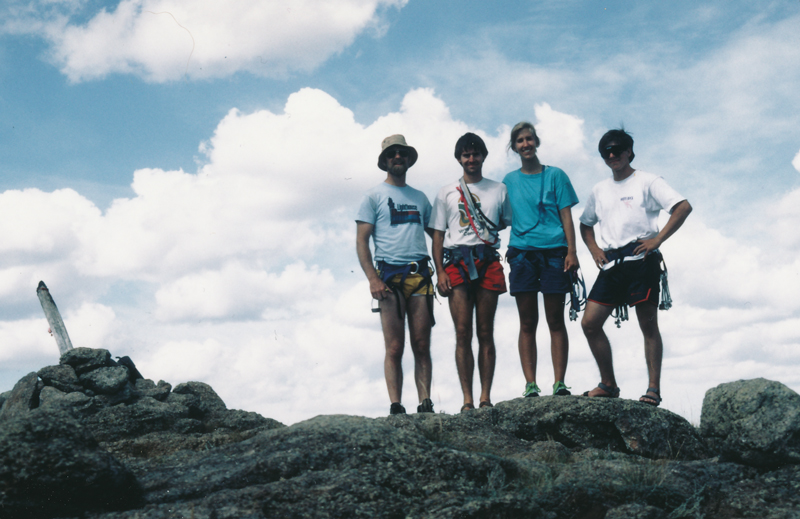
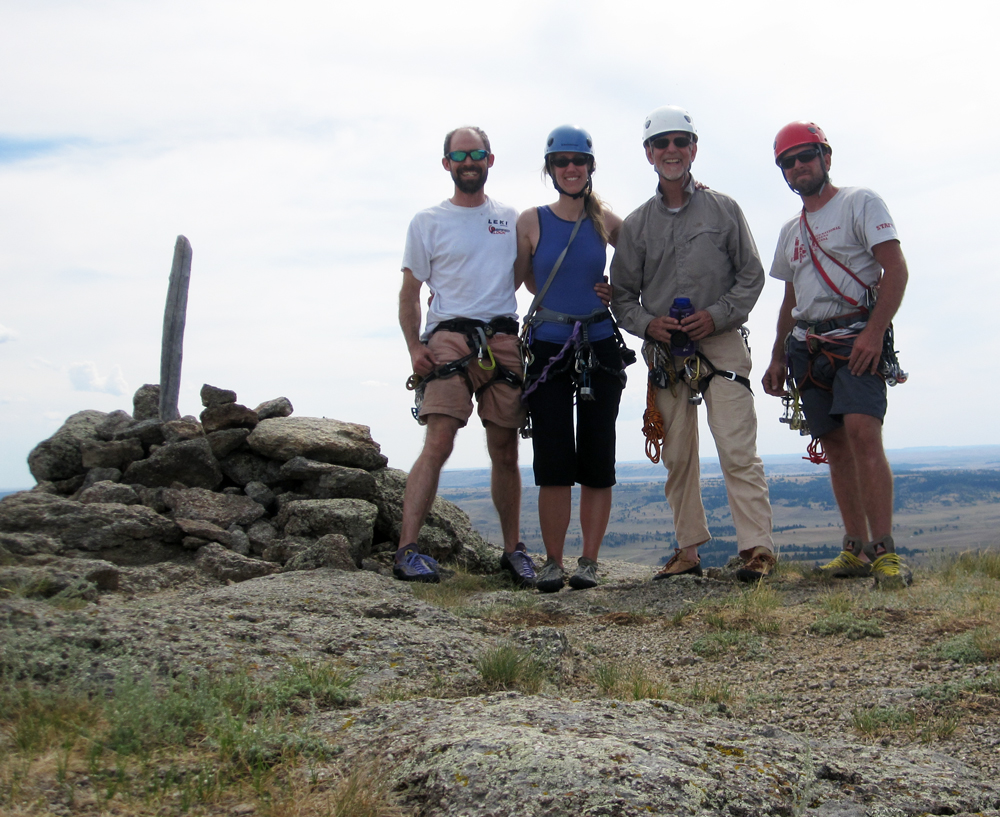
Last weekend I finally found out as I went with Doug and his brother and dad to climb Devils Tower in Wyoming. We had all climbed this famous rock formation in 1992 and were excited to give it another go. This reunion-style climb with my family was more than I could have ever asked for as my first post-surgery multi-pitch climb. Being back on the rock with all of them was a blessing.
Our gang on the summit of Devils Tower, WY, 20 years ago.Our same team on the summit in 2012.We are tired and thirsty, but safely back at the base.
The 15-minute video below highlights our adventure on the Tower. As I watch it myself, I am in awe at how similar the real images are to the little movie that played in my head in the hospital. For climbing and so many other aspects of my life, the things I imagined and hoped for with my ostomy did turn into reality–a truly amazing reality.
An hour into my drive home I watched the red-orange landscape around Gypsum, Colorado, transition into the craggy grey of Vail Valley. My mind shifted from busy camp schedules and activities to inward contemplation.
I had just spent the last eight days volunteering as a cabin counselor at the Crohn’s and Colitis Foundation of America’s Camp Oasis, and I had much to process. The hours of uninterrupted thinking time that now lay before me was exactly what I was craving. I turned up the tunes and let my mind go back to all the moments of camp.
My camp experience began with a full day of orientation before the kids arrived. We learned the policies of the camp, information about all the activities and the schedule, and how to help campers with common issues such as homesickness. I had been a little nervous at home, but felt much more prepared after these sessions. I also had a chance to get to know all the other volunteers who were helping out in a variety of roles ranging from cabin counselors to medical staff to kitchen help.
One unexpected thing for me at camp was that I seemed to be the only volunteer cabin counselor who had IBD (as far as I could tell through conversations anyway). Many of my friends who help out at Camp Oasis at some of the locations out east have talked about shared IBD experiences among the counselors. The camp in Colorado is only two years old. I would imagine that in years ahead as campers get to be the age where they can volunteer as counselors, there will be more cabin volunteers who have lived with Crohn’s and Ulcerative Colitis. Whether or not they had IBD, all the volunteers I worked with were absolutely amazing. They gave their time because they wanted to help chronically ill children have the time of their lives at camp, and they did so with enthusiasm and devotion.
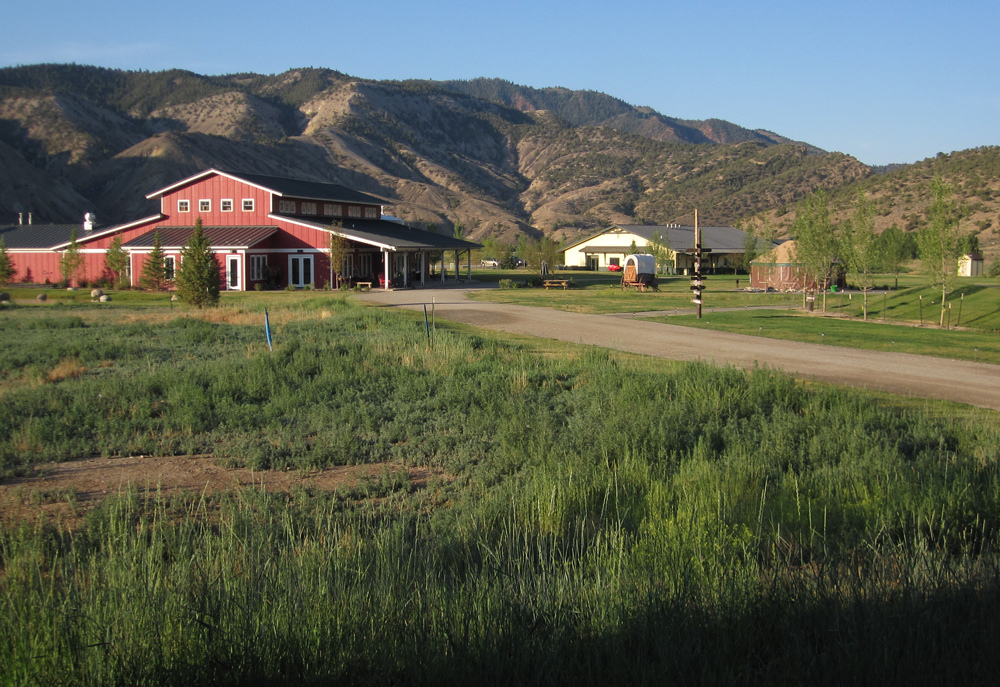
Roundup River Ranch, the camp at which the Colorado Camp Oasis is hosted, is a beautiful facility with some of the most energetic, capable and dedicated staff I have had the pleasure of working with. The medical personnel were incredibly caring and the kitchen staff worked tirelessly delicious meals that were enjoyed by all the campers, even those with food intolerances and allergies. The staff camp counselors put vast amounts of time, passion and energy into making sure the kids had the best experience possible. The cookhouse, cabins and medical facility were top-notch. The beds even had Tempur-Pedic mattresses which had been donated.
A view of Roundup River Ranch including the cookhouse and medical building.
I even had a chance to experience the excellent medical facility, called the Depot, at camp myself. On the second day, I came down with a low-grade fever, horrible sore throat and cough. The doctors and nurses felt I just had a cold virus of some sort, but put me up in a private room set aside for ill staff for 24 hours. I was incredibly bummed to miss a day with the campers, but knew I needed the rest. I was reunited with my group and, though still not back to 100%, felt much more energetic for the rest of the week.
I also went over to the medical facility to change my ostomy appliance. I was a little concerned about monopolizing the bathroom in my cabin quarters, so I talked to the nurses and they recommend I come over to the Depot to change. This was nice, since I am not the fastest at my appliance swaps. The skin around my stoma is in beautiful condition, but achieving this takes some time for me. Per recommendations from my WOCN and the home health nurse I worked with after surgery, I have a meticulous routine that includes a small piece of Duoderm, an Eakin Cohesive Seal, and even a little stoma paste. I can sometimes spend 30 minutes changing out appliances with these steps, especially if my stoma starts spewing. I greatly appreciated having a private place to carry out my skin care routine at camp.
I was a counselor in a cabin of eight 12- and 13-year-old boys. The camp had ended up with a shortage of male staff and volunteers, so each of the boys’ cabins had two female counselors and four male counselors. Most of the camp counselor staff at this camp are paid and there for the whole summer, and volunteers augment the paid staff. Of the six counselors in my cabin, two of us were volunteers. This was nice because there was much expertise, and I never felt like I was left to handle a situation that I wasn’t prepared for. There was always a regular staff person close by to help out.
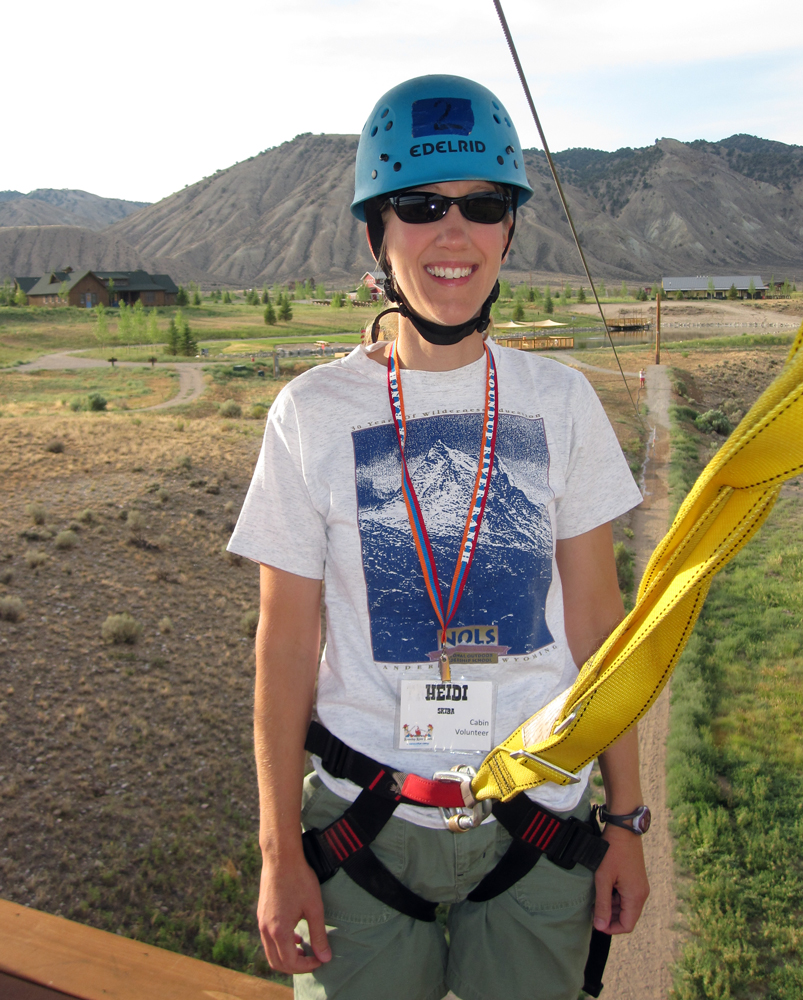
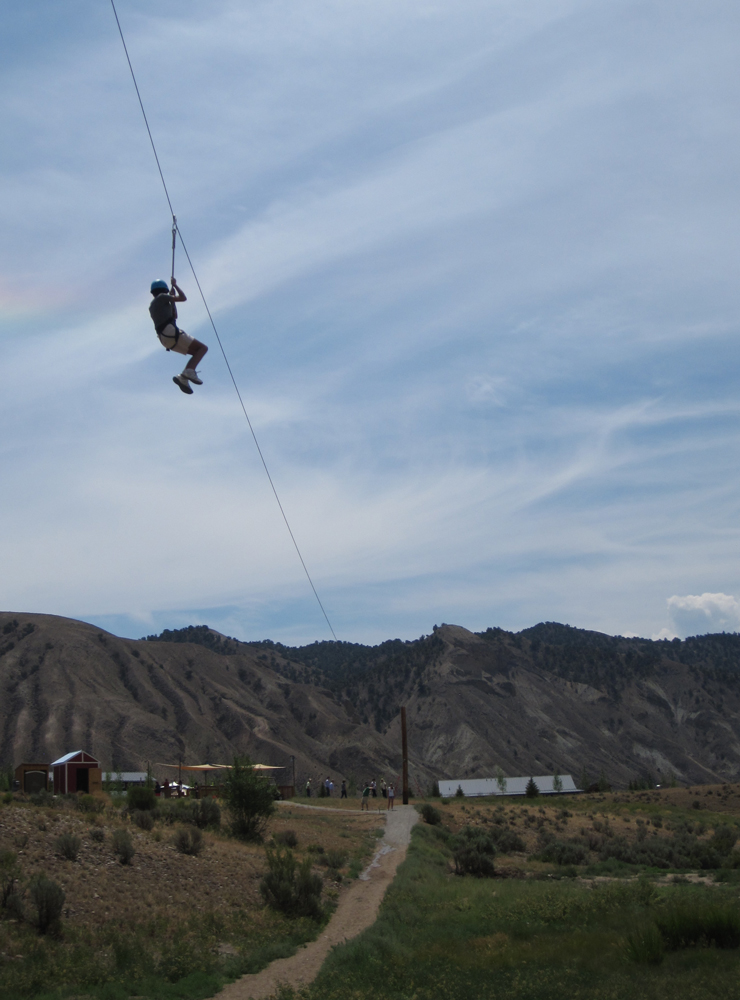
I got up bright and early one morning to try out the zip-line during a special session set aside for volunteers. It was high! As I stepped off, I was reminded of how the campers were willing to try so many new and challenging activities.
The boys in the cabin were such a great group of kids. Though I struggled a bit with conversation at times (not knowing much about sports teams and being inept at quoting movies–both popular with this age group), I loved working with the kids and cheering them on at all their activities and playing silly cabin games like Mafia and Ninja. Days were filled with all sorts of fun activities like archery, arts and crafts, climbing and zip-lining, horseback riding, boating and fishing. A highlight of the week for me was the talent show. The kids came up with magnificent acts, and I was blown away with how much the children encouraged and cheered each other on while they were watching the performances. It was absolutely beautiful.
The camp’s zip-line.
One of my favorite parts of camp was quietly listening to the children share stories with each other. One day I heard three boys at lunch encouraging a camper who worried that he might not be able to have a career in the military because he had Crohn’s. The other boys were telling him he would be able to do anything he set his mind to. I also heard the children talking to each other about surgeries and medications, belly noises and going to the bathroom a lot. Another counselor in my cabin saw some of the kids showing each other their surgery scars. This is the magic of Camp Oasis; the children are given the opportunity to take part in a fun camp experience while building friendships and bonding with others who truly understand what it is like to have the same chronic illness.
Every night right before bed, each cabin took part in an activity called cabin chat which provided a time to talk and reflect as a small group. The cabin counselors posed several thought-provoking questions for the campers to answer in a quiet and safe atmosphere. These questions were never directly related to illness, but many of the campers answered with things that tied into having Crohn’s or Colitis. Counselors also had the opportunity to answer the questions. During one cabin chat a few days into the session, a question fit well with my experience of having UC, so I shared that I had the disease. I really have no way of knowing if it made a difference to the children. However, I had many conversations about camping, climbing, skiing and canoeing with the youngsters (which were popular topics with several of the boys). Perhaps in some small way the children realized that having ulcerative colitis has not stopped me from leading a full life.
On the final evening of camp, the children made a “web of gratitude” where they came up and told everyone the things that they were thankful for by adding a strand of yarn to a circular frame. Listening to the things that the children shared brought tears to my eyes. It was clear how much this camp experience had meant to them, and I was so happy that I had been part of it.
My three-hour drive home was not nearly enough time to process all the things I had learned at camp… all the inspiration I was feeling… and the amazing memories that will be part of me forever. When I got home I talked to Doug about it for so long that I nearly lost my voice. I don’t know when my work and vacation schedules will allow me to volunteer again, but someday I hope to head back to camp. Volunteering at Camp Oasis was one of the most valuable things I have done. I would highly recommend it to anyone.
Usually it is the big flashy things like climbing ropes, packs or tents that become my most coveted outdoor gear. Lately however, a much simpler and unassuming piece of gear has become one of my favorites.
A couple of months ago UPTT Inc. sent me a One Pass Ostomy Draining Device (OPODD) to try on my adventures. Due to my hip injury, I had to put off testing the device outdoors until a three-day backpacking in Rocky Mountain National Park in June. This, however, did not stop me from trying it indoors. The OPODD is an instrument with two flat rollers that clamps onto your pouch when you want to empty. With one downward motion, the device pushes all pouch contents swiftly out of the tail. Though it took a few tries to get used to the OPODD, once I had the hang of it I found myself reaching for the tool again and again. It is especially useful on those days when my output is thick and difficult to push out of the pouch. One quick swipe of the device and the output is forced out — no matter what its consistency.
I liked the device so much that I was soon using it every time I emptied at home. Though I usually leave the device at home because I seldom carry a purse, the slim design of the OPODD makes it easy to fit in a handbag or tote to be carried anywhere you go.
The OPODD clamps on the pouch. Emptying the contents only takes one smooth downward swipe.
After trying it out, I was convinced that the OPODD was great to use at home. Now it was time to take it into the wilderness with me. Ever mindful of my pack weight, I am very picky about what I choose to bring on backpacking trips. Something has to be highly useful to make the cut. It didn’t take long to realize how happy I was to have the OPODD along on my first backpack adventure of the season. In the middle of cooking dinner on our first night, the sky darkened and big heavy raindrops spilled from the sky. We swiftly donned our rain gear and dashed under the trees with our dinner. Despite being covered by tree branches and Gore Tex, my clothing soaked up the dampness and my teeth began to chatter from the chill. Leave it to my ostomy to decide that this was the best time to produce ample amounts of output. I had to make a trek to the camp privy in a full-on rain storm.
When I got to the backcountry restroom facilities (a pit toilet sitting out in the middle of the woods with no walls or roof), I quickly grabbed my OPODD, clamped it on my pouch, slid it down and had the contents emptied within seconds. Normally it would have been hard to manually work output to the tail-end of my pouch with such cold hands, but maneuvering the device was easy even with the chill-induced clumsiness.
Heading to the privy with my OPODD on a very chilly evening.
That night, the handiness of the OPODD proved itself again. When I do strenuous exercise such as backpacking during the day, my output often slows down or stops almost entirely. That means everything comes out later — often in the middle of the night. Getting up at 2 a.m and walking five minutes away from camp alone is unnerving. Sitting down to empty my appliance by headlamp while surrounded by miles and miles of pitch black wilderness spooks me out. It is one of those times when I swear twigs are being stepped on all around me, and I imagine mountain lions behind every boulder. Pulse racing and goosebumps fully engaged, I want to purge the contents of my pouch as fast as possible and get back to the tent. This particular night, I ended up having to endure this experience a couple of times. It was wonderful to be able to clamp the OPODD on my pouch, slide the contents out quickly and return to the comfort of my sleeping bag and the company of a snoring Doug.
My positive experiences that first day made the device completely worth its weight — and that is really the only issue with bringing the OPODD on outdoor trips. For those who try to backpack on the ultra-light side, the OPODD weighs in at 3.6 ounces. Not heavy by any means, but when one is trying to get their pack weight as low as possible, every ounce counts. Personally I feel that the extra weight is a small price to pay for the ease the device adds to emptying my pouch in the wilderness.
The only challenge I noticed with the OPODD was that it couldn’t slide over the Velcro at the end of my Convatec Pouches. This didn’t end up being an issue though. I would just push the output as far as the Velcro with the OPODD and then drain out the rest manually. This actually worked great because it prevents any output from getting on the device.
You can’t see my OPODD, but it is tucked in my pack as I head out on a backpacking trip in the Mt. Massive Wilderness two weeks after the one in Rocky Mountain National Park. I plan to bring the OPODD on every wilderness excursion in the future.
As I continued to test out the OPODD, I realized that it was going to become an indispensable piece of outdoor gear. Two weeks after the Rocky Mountain National Park trip, Doug and I were out in the backcountry again on a hike up Mt. Massive which included two nights of camping in the wilderness. This time the challenge was mosquitoes which swarmed around me every time I tried to empty. One plus of having an ostomy is that you don’t have to expose your bum when emptying like you would when having a normal bm. Still, the skeeters were happy to attack the uncovered skin on my hands instead. The speed at which the OPODD allowed me to empty prevented me from getting many itchy bites.
From cold hands, to scary dark nights and blood-thirsty insects, the OPODD came to the rescue and allowed me to empty quickly and easily. I never plan to hit the trail without it again.















 Ostomy Outdoors