From peak to pool

Lately I have become part octopus, part mountain goat and part fish.

The octopus part of me has been juggling tasks at work like crazy. I spent the last couple of months organizing a big festival while also having a bunch of other programs to design and lead. One weekend I was teaching a nature-sketching workshop, the next a toddler class on toads. When I am done typing this post I need to practice my guitar for an upcoming campfire program. I have longed to come home and do something relaxing after this whirlwind, but that is not in the cards this summer. What is on the agenda is Rainier and I need to use every spare minute getting my body ready for the climb.

This leads me to my mountain goat side. Just about every weekend, Doug, his dad and I have climbed a 13,000- or 14,000-foot peak. Each time we do one of the hikes, we have been increasing the weight in our backpacks. Our last hike took us to 14,141-foot South Mt. Elbert. The hike was around 10 miles round trip and I was able to carry 45 pounds with 4,500 feet of elevation gain. I felt really strong and was ecstatic with the accomplishment because this is similar to what I will have to do on Rainier. I still have just over a month of training time before the trip so the plan is to keep doing hikes of this nature, including a few overnight trips, so that we can begin to move more quickly and efficiently on steep terrain with heavy packs. Some evenings after work  I have also been going up to the Flatirons in Boulder, CO to hike some shorter and lower (though still steep) peaks.

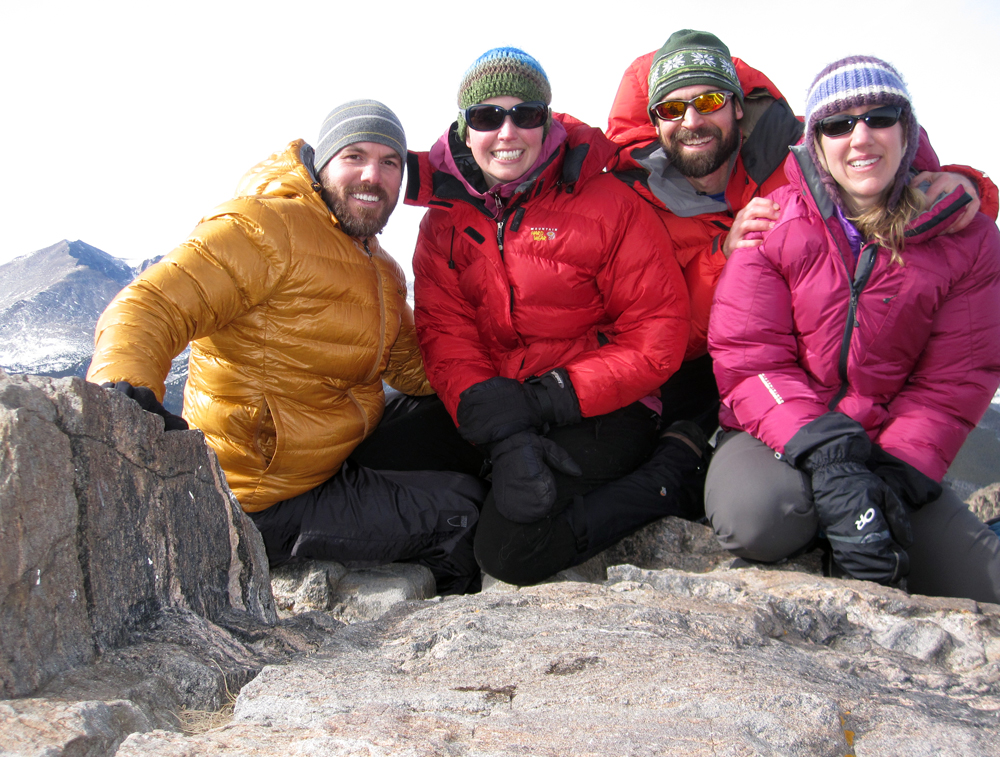
On the summit of 13,5751 Rosalie Peak on May 26, 2013.
Sneaking in a 7 mile hike of 8,144' Green Mountain after work on May 30, 2013. The sun was quickly setting!
Sneaking in a seven-mile hike of 8,144-foot Green Mountain after work on May 30, 2013. The sun was quickly setting!
Summit-South-Elbert-web-ver
A few days later on June 2, 2013 we made it to the summit of 14,141-foot South Mt. Elbert.
And tagged 13,588' Mt. Cosgriff on the way down.
We tagged 13,588-foot Mt. Cosgriff on the way down.

So far, my joints have been doing great through my training regime. Part of this has to do with the comprehensive physical therapy program I am on. Between my shoulder, hip and Achilles exercises, I spend about 45 minutes most days on physical therapy. It taxes my schedule and makes me stay up later on some nights than I would like, but the benefits have been huge.

The other reason I think that my joints have been doing so well is that I discovered a new exercise: deep-water running. Hiking one or two big peaks each week with a heavy pack is hard on my joints, so in between I have decided to skip running, climbing, zumba and even biking to train as these all make my Achilles tendonitis flare up. I know I will return to all these activities when I get back from Rainier as my Achilles is basically already healed. However, for now I just don’t want to risk re-injuring it since things are going so well and I am able to hike long distances with elevation gain again. I had tried swimming to increase fitness, but the repetitive arm motions aggravated the avascular necrosis in my shoulder. I knew that I had to complement the long weekend hikes with something in order to get enough cardiovascular training in mid-week. But what activity?

I took to the internet to get some ideas and there I discovered the perfect training activity: deep-water running. Doing this exercise would help me build up cardiovascular fitness and muscle strength while giving my joints a chance to rest from the long hikes I was also doing. A quick Google search revealed several instructional videos on deep-water running. and it looked pretty easy. It basically involved putting on a floatation belt, going to the deep end of a pool and running almost like you would on land.  The running form ends up being slightly different, but the videos provided enough guidelines that I felt confident to give it a go.

The first time I ventured to the gym to try the new activity I felt awkward because I didn’t travel very far when running in the deep end of a pool. On land, when you increase your running speed and intensity you generally travel a much greater distance. In the the pool, I can run as hard as possible and only travel 15 feet. It reminds me of crazy nightmares where I am being chased by ghosts, monsters or bandits and I am running really fast to get away but not getting anywhere. When I exhaust the length of the deep end, I turn around and head the other direction.

Suited up and ready to go in my floatation belt.
With the belt keeping me afloat, I mimic the running motion I would do on land.

Running in small circles in this way doesn’t feel very interesting compared to running on a scenic trail, but I have to remind myself that it is really no different than running on a treadmill. However, the cardiovascular benefits are huge. Deep-water running really gets the heart rate up. Not to mention that the resistance the water provides has helped me build muscle–and not just in my legs. I move my arms underwater just like I do when I run on land, but because the resistance is so much greater, I have noticed my arms are getting a lot stronger too.

As on land, one has to pay attention to their running form in the water. I find that if I am getting lazy about form, I will start treading water instead of running. Treading water is not nearly as strenuous as running and does not get my heart rate up to an adequate training level. To make sure I am keeping my form, I will actually close my eyes and picture myself running on a trail or road and try to mimic that movement in the pool. Another trick that works well for me is to pick a stationary object on the edge of the pool and pretend it is another runner in a race that I am trying to catch. Both of these things help ensure that I stay in good form and keep my heart rate up.

For workouts, I usually deep-water run for about 45 minutes to an hour and then soak in the hot tub for 15 minutes which feels amazing on my joints. I have been deep-water running 2-3 times a week. A lot of people may be wondering if this influences my ostomy appliance wear-time. I find that being in the pool and hot tub this much does not affect my appliance’s ability to adhere. However, I change my appliance every three to four days regardless of what activities I do. Perhaps if someone was trying to get a seven-day wear-time, swimming might shorten it a bit.

I also do not have to do anything different to get my appliance to stay on in the pool. I basically jump in with my wafer as is (my wafer method is pictured in this post). Some people who have had issues with their appliances staying on in the water have great luck with products such as Sure Seals and Coloplast Brava Elastic Barrier Strip. I have tried both and they work well. I just find that my appliance sticks fine without them for the amount of swimming I do. If I were to take a beach vacation or a trip to a water park where I was in the water all day I would definitely use these. As far as swimming attire when I am deep-water running, I wear a variety of tankini tops with swim shorts and then an Ostomy Secrets Swim Wrap which covers the part of my pouch that sticks out above the low-rise swim shorts.

If you are looking for a gentle-on-the-joints exercise to gain strength I would recommend deep-water running. I only wish I had discovered this activity sooner after surgery. It would have been a great low-impact way to get back into shape once my incision was healed and I could return to water sports.

For now, it has become this octopus-mountain goat-fish’s best option for getting in shape for Rainier. It fits into the busy work schedule, is easy on the joints, and gets the heart pumping. I am feeling more optimistic then ever that as long as the weather cooperates for our ascent, I will be strong enough to stand on that summit.

Will you help by answering a survey?

WEGO Health is a social network of bloggers and tweeters who are actively involved in health online. It’s a platform for committed health advocates to foster new relationships, gain access to helpful resources, and to grow their communities.

WEGO Health asked me to share a survey with the Crohn’s Disease and Ulcerative Colitis communities to make sure that they get as many patients and caregivers involved as possible. The survey will take about 10 minutes. Will you please help?

Take the survey.

As a thank you for each survey, WEGO Health will make a $1 donation to a charity of my choice.

Thank you for helping!

How to select ostomy pouch styles for the outdoors

Last weekend I was reminded why I love using closed-end ostomy pouches on hikes and climbs. I was up on a long ridge between between Loveland Pass and Mt. Sniktau in Colorado. Though it was a gorgeous 75-degree day down in Denver, up at 13,000′ it was blustery and frigid. We left the house at 4:15 a.m. so that we would be done with our climb and back to the car before afternoon thunderstorms came in. I emptied my appliance before leaving the house, but by the time we reached the summit of Mt. Sniktau at around 9 a.m., my pouch was reaching its 1/3 full point. This is typically when I like to empty it.

Problem was, no ideal place to empty a pouch could be found on the entire ascent. The wind was howling and shelter was non-existent. On top of this, there were many feet of snow on the ground. The few places where there was exposed earth, it was frozen solid.  There was also no way to go off of the ridge to empty away from the trail. Precarious cornices sat 50 feet to the east of the route and dangerous avalanche slopes could be found 50 feet to the west. Emptying would have meant draining my pouch in the snow close to the area where people travel. Once the snow melted, fecal matter would have been left on top of the ground in a popular area. This was one of those instances when wearing a two-piece ostomy system and using closed-end pouches was almost a necessity.

The ridge between Loveland Pass and Mount Sniktau provided few places to empty a pouch.

If you are just finding out that you will be having an ostomy, or are recently out of surgery you may find the sheer number of ostomy appliance choices to be overwhelming. Closed-end, drainable, one-piece, two-piece — what do all these mean and which ones are best suited for various outdoor adventures? A lot of these choices come down to a matter of personal preference.  The goal of this post is to share some information on the basic types of appliances and explain how I utilize the various options on peaks and trails. I’d also like to hear what you’re using in the outdoors.

First, ostomy appliances come in one- or two-piece options. With a one-piece appliance, the wafer (also sometimes called a skin barrier) is permanently joined to the bag and cannot be separated–you’re literally stuck with this pouch until you remove the whole thing. The benefits of this style is that it has a low profile and sits very flat against the abdomen. The disadvantage is that because the wafer and bag cannot be separated, you lose the flexibility of being able to swap out different types of pouches unless you take the whole system off your belly. I used one-piece drainable pouches for the first five months after surgery, and on one of my very first major outdoor trips as an ostomate: a three-night early spring backpacking excursion. The ground was snow-covered and frozen on this adventure and I ended up trying to drain my pouch into plastic bags so that I could pack out my waste. It didn’t go well and I got output all over my pants and all over the outside of the bag I was trying to drain into. From that point on, I recognized that a two-piece system would be a better option for my outdoor trips.

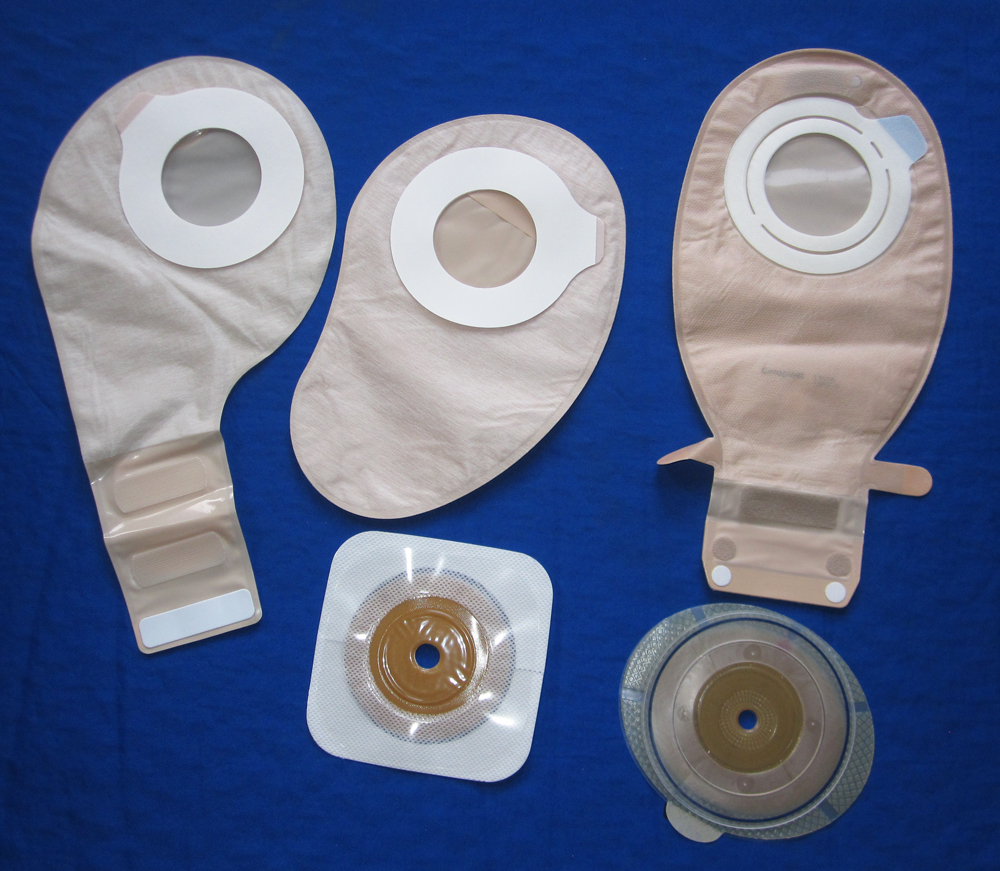
In a one-piece ostomy system, the wafer is permanently attached to the pouch. Because of this, swapping out different pouch styles on the same wafer is impossible.
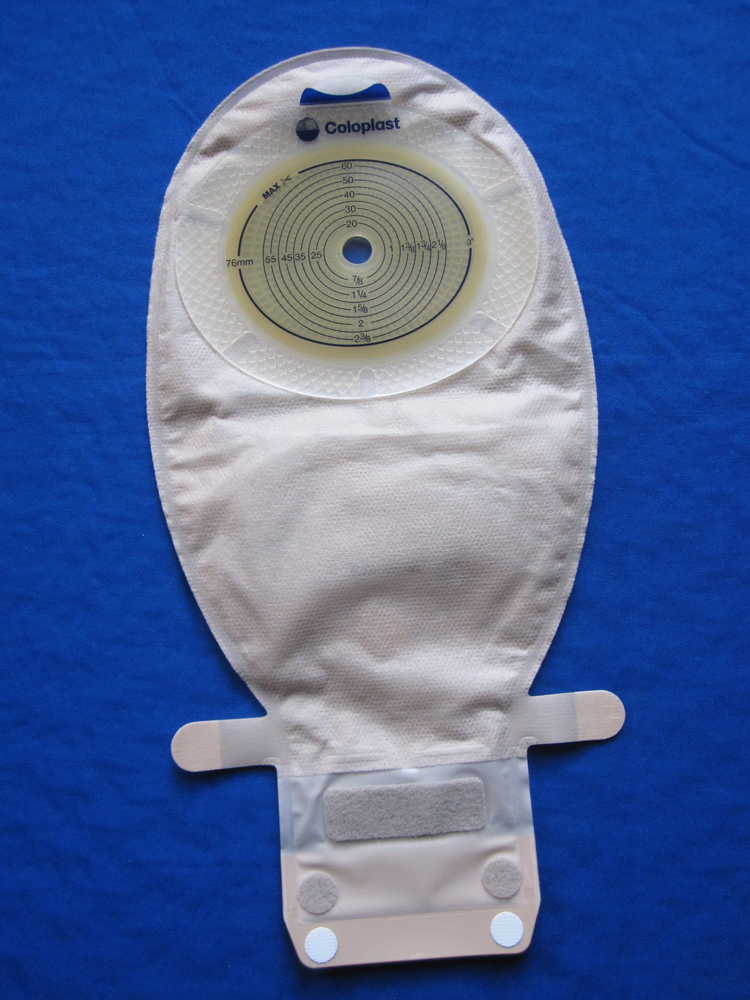
In a one-piece ostomy system, the wafer is permanently attached to the pouch. Because of this, swapping out different pouch styles on the same wafer is impossible. Pictured is a Coloplast SenSura X-Pro drainable one-piece appliance.

With a two-piece appliance, the wafer and pouch are separate and attach to each other with a plastic ring that snaps together much like Tupperware. Once the wafer is on your belly, different styles of pouches can be put on or taken off this ring. These systems are a little higher profile because of the plastic ring. However, there is much flexibility in using them because you can swap out different types of pouches depending on your activities. Due to this, a two-piece appliance is my clear choice for outdoor adventures. Also, I find that even with the plastic ring, two-piece ostomy systems are undetectable under my clothing.

There are also choices for the pouch portion of an ostomy appliance; they come in drainable or closed-end versions. Drainables have a tail that unfolds so that output can be emptied out of the bottom. Once the tail of the pouch is wiped clean, it rolls up and closes with either a clip or a Velcro strip until it needs to be emptied again. A person with an ostomy may use the same drainable pouch for multiple days.

Closed-end pouches have no tail. Once they fill up, they are designed to be thrown away full. Due to their simpler design, they cost less per bag than drainable pouches. However, most ileostomates don’t use them the majority of the time. Due to output coming directly out of the small intestine having higher water content, those with ileostomies usually have to empty their pouches six times a day or more. Even though closed-end pouches have a cheaper per-pouch cost, going through so many  in 24 hours makes them impractical and not cost-effective. Generally closed-end pouches are better suited for those with colostomies who may only have to empty a few times a day. That said, there are occasions when closed-end pouches are the perfect tool for those with ileostomies too.

With a two-piece system, the pouches can be separated from the wafer. On the right is a drainable pouch and on the left a closed-end one.
With a two-piece system, the pouches can be separated from the wafer and swapped out. On the left is a drainable pouch and on the right is a closed-end one. Pictured clockwise is a Convatec Sur-fit Natura drainable pouch with an Invisiclose tail, a closed-end pouch, and a Durahesive cut-to-fit wafer.

Drainable pouches are my preference most of the time, even on wilderness adventures, as long as I can find a good place to empty. Packing out full closed-end pouches can be heavy due to the high water content of ileostomy output. In fact, I once weighed the trash bag that contained a day’s worth of full closed-end pouches after an all-day climb and it came in at 3.5 pounds! Multiply that for trips that may be several days long and you can see why I use closed-end pouches only when necessary.

However, my hike on the ridge is an example of an ideal time to use a closed-end pouch. I also like using closed-end pouches in other places where it is impossible to empty: on cliff faces when climbing, on rocky peaks where it is impossible to dig a cathole, and on crowded urban trails. Though I haven’t been on a river trip with my ostomy yet, I can also see them being very useful in these situations when one cannot get far enough from a water source to empty. Also, it takes longer to dig a hole in the ground and properly drain my pouch when in the wilderness than to swap out a pouch. There have been a few times when I have been caught in storms and have decided to swap to a closed-end pouch instead of draining in order to minimize my exposure to lightning, high winds, cold rain or other dangerous elements.  Both drainable and closed-end options also come in smaller sizes if one wants a tinier pouch for some activities such as swimming.

It is also worth mentioning that there is one other style of two-piece ostomy appliances; they are called adhesive coupling systems. Instead of having a plastic Tupperware-like ring like traditional two-pieces, the wafer has a smooth plastic area and the pouch affixes to this with a sticky adhesive ring. The benefit of these is that, without a plastic ring, they are very flat on the belly. You can still swap out pouch styles by peeling off the old bag from the wafer and sticking on a new one. However, I find that adhesive coupling appliances don’t work well on my outdoor trips . When I peel off the full pouch, a little output inevitably gets on the place where I am supposed to affix a clean one. I then have to fully clean this in order to get the fresh pouch to stick. It ends up being too messy and hard to deal with in the wilderness where there is no water to clean up with. I find it much easier to use the traditional two-piece appliances with plastic rings. Even if a small bit of output gets on the ring, it still snaps together fine and is not messy at all.

In adhesive coupling two-piece systems, the wafers and pouches stick together with an sticky ring. They are low profile, but I find them messy to swap out when on outdoor trips.
In adhesive coupling two-piece systems, the wafers and pouches adhere together with an sticky ring. They are wonderfully low profile, but I find them messy to swap out when on outdoor trips. Pictured on the left is a Convatec Esteem Synergy adhesive coupling system and on the right is a Coloplast SenSura Flex wafer and pouch.

A downside of closed-end pouches is that they are a disposable item. I try to make the best environmental choices possible in my daily activities, so I do sometimes cringe when I throw away my bag of closed-end pouches after a climb knowing I have added more to the landfill than I would have if I would have stuck to a drainable that day. I try to remind myself that I do this for a medical reason and to deal with a basic life process of bodily waste removal. In other aspects of my life, I try my best to be gentle on the earth. I take reusable bags to the store, drive a fuel-efficient vehicle, use public transit, buy organic produce to protect wildlife from pesticides, use eco-cleaners to keep toxins out of our water supply, recycle every item possible, and make wise purchases. I hope that, in the grand scheme of things, the impact of the pouches that I throw away is small. I really do only try to use them when absolutely necessary.

When I was on Mount Sniktau on Sunday and decided draining wouldn’t be possible, I even began to wonder if I could find a good place to take off my full pouch and put an empty closed-end one on. It was so windy and there were people everywhere on the ridge. Once my pouch was 1/3 full, I couldn’t find a place to make the switch. I decided I would wait until later to deal with it. The good thing about my ostomy is that, unless I eat something that irritates my stomach and gives me pure liquid output, I have plenty of time to get around to emptying. It is rarely urgent.

On the summit of Sniktau. It was really cold and windy up there with very little shelter.

As I made my way down the ridge from the summit, more and more people were coming up and I realized I couldn’t be fussy with my site selection for swapping. My pouch was now 1/2 full and I needed to take care of it soon. I ran ahead of Doug and his dad but also saw that some people were heading towards me.  I had about 5 minutes before they reached me so I tossed my pack to the side of the trail next to a small pile of rocks and tried to create a wind break. I then dug my supplies out and tied a small doggie poo bag to my pack strap so it wouldn’t blow away (this is what I would throw the full pouch into). Next I pulled down the front of my pant waistband, took my hernia prevention belt off, and quickly swapped out the full pouch for the clean one. Just as I had gotten my clothing back into place and was bagging up my trash, the two hikers approached me. I said hello and we talked for a second about the route. They clearly had no idea I had just dealt with my ostomy. To them, from a distance it probably looked like I was futzing around with my clothing or backpack. One can very discreetly manage their ostomy on the trail with a two-piece system and closed-end pouches.

With all the options out there, it pays to experiment with all the different brands and styles. Don’t feel like you have to use only one type of appliance. Have a dressy occasion where you definitely don’t want your appliance to show? Wear a sleek one-piece that week. Hanging out at the beach all day? Go for a mini drainable pouch that won’t hang out beyond the bottom of your suit. And if, like me, you find yourself needing to empty on a wind-swept ridge with sheer drop-offs on both sides — a two-piece with a closed-end pouch may be just the ticket. Take advantage of all the products out there to make life with your ostomy the best it can be.

This is the spot where I swapped out my pouch. By the time Doug caught up and snapped this photo, I was finished managing my ostomy and was changing my camera battery. However, from a distance swapping out a pouch doesn't look much different than this. It can be done very discreetly.
This is the spot along the trail where I switched out my pouch. By the time Doug caught up and snapped this photo, I was already finished managing my ostomy and was changing my camera battery. However, from a distance, swapping out a pouch doesn’t look much different than this. It can be done very discreetly.

Wilbur the stoma gets a biopsy

On Friday I was having some major déjà vu. However, it wasn’t all in my head. I actually was in a place that I had been before: the outpatient surgery pre-op area of the hospital where I had the colonoscopy that led to me being admitted for a 16-day stay for my final severe UC flare in the autumn of 2010. Except for the fact that I wasn’t feeling sick and hadn’t just been through the worst bowel prep of my life, it felt crazily familiar. The same nurse that had checked me in for that colonoscopy over two years ago checked me in on Friday. He even recognized me! That said, that is where the similarities of the visit ended. Unlike last time, I wasn’t in the outpatient surgery area for anything serious and didn’t even need an IV. I was simply there to have Wilbur, my stoma, biopsied.

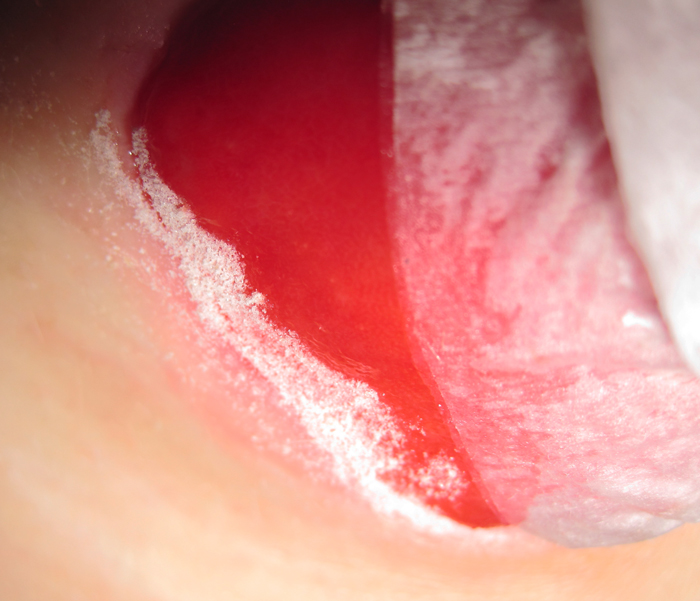
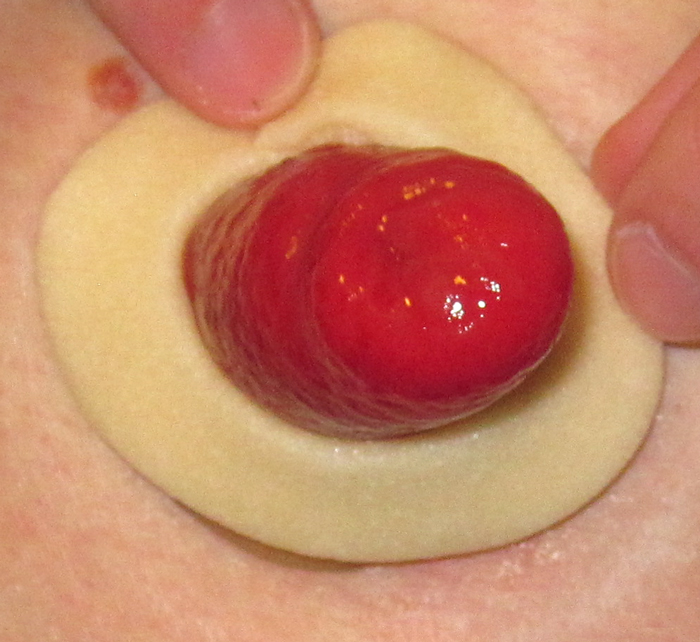
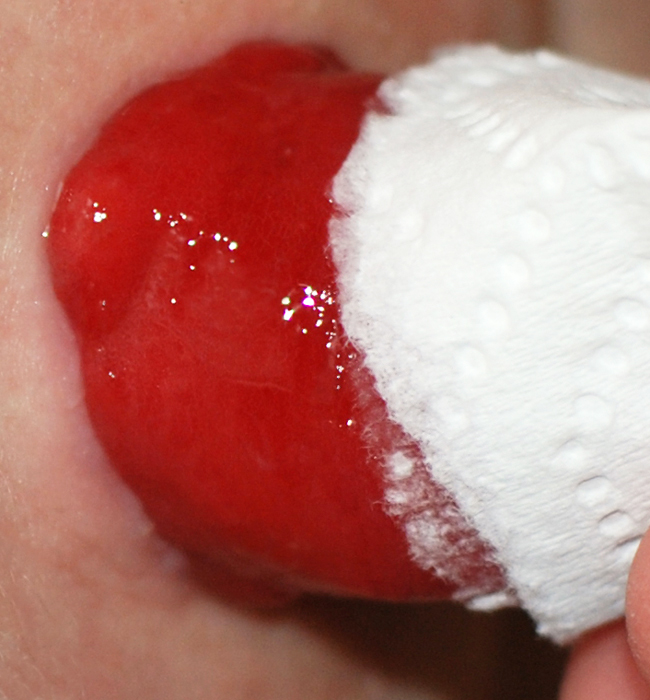
In March I wrote about some ulcers on my stoma. After an appointment where I brought some stoma photos showing what had been going on, my IBD nurse prescribed a couple of months of Pentasa to try. Since then, we have been patiently waiting for some ulcers to show up so that they could be biopsied to better determine if I was actually dealing with active IBD. It seemed like every time I would get an ulcer, I couldn’t get in for a biopsy because it was the weekend, I was out-of-town, the ulcers would heal too quickly, or my doctor was not available.

Finally, the perfect chance presented itself. Last Thursday night, I was changing my appliance and spotted a big ulcer that had appeared during the day. The next morning I emailed my IBD nurse and she put things in motion to see if my doctor could squeeze me in for a biopsy. However, my doctor wasn’t working in the GI office that day; she was working at the hospital so I would have to see her there. Within a few hours, everything was set up and I drove from work to the hospital, checked in and was soon on a stretcher in a gown reminiscing about how sick I had been last time I was in that situation.

Once things were ready, I was wheeled down to the room where they do colonoscopies and there I saw my GI doctor for the first time since my UC flare 2.5 years ago. I think my GI doctor is one of the greatest, nicest physicians ever, and I was truly happy to see her again under much better health. We caught up for a bit and talked about the biopsy. She explained the procedure and said she would be using the same tool to remove tissue that she did for intestinal biopsies during routine colonoscopies.

I didn’t even have to take off my wafer. We simply snapped off my pouch, cleaned off the stoma a bit and were set to go. My doctor pinched off a half-dozen tissue samples from my stoma with the tool, including the area of the ulcer. We chatted as she worked and she laughed saying how strange it was to be talking to someone while doing an intestinal biopsy because usually the patients are under sedation. It is pretty handy that stomas have no nerve endings. My stoma bled a little when she plucked off the samples, but the whole procedure was pretty uneventful.

My stoma was completely cooperative and the whole process was mess free until the very end. When the nurse had removed my pouch, she sat it on the table. When we were done, she handed it to me to put back on. It was a fresh pouch from that morning, and I had emptied it before heading to the hospital so it was fairly clean, but there was a bit of output in it from the drive and checking in to pre-op. I had fully intended to put on a clean pouch on after the biopsy and had brought with me.  However, when the nurse handed me the  one we had removed I thought Oh… maybe I can just re-use this since it is fairly clean. Big mistake. Trying to put on the half-full pouch while in a reclined position didn’t go so well and I ended up spilling a small amount of output on my belly. It was a little embarrassing, but the doctor and nurses helped me clean up and were so nice about it that it seemed like no big deal at all. I tossed the old pouch, put on a totally clean one and was good to go.

In the days since the biopsy, Wilbur has started to look like he was attacked by a vicious woodpecker. There are small, circular, ulcer-like depressions in every spot where tissue samples were removed. Though the sores are scary to look at, they should heal in a couple of weeks.

On Tuesday I got the results of the biopsy. It showed non-specific inflammation, but no signs of Crohn’s disease or ischemia (lack of blood flow to tissue). We will keep an eye on things for any changes, but the doctor said that such inflammation could be caused by something as basic as mild surface irritation from my pouch.

It is a relief to know that these ulcers are likely harmless and it feels great to have this and so many other concerns resolved as I head into summer. My shoulder avascular necrosis is feeling great with physical therapy, my hip pain appears to be caused by something pretty benign, and my recent Achilles tendon heel tweak hasn’t been hurting when doing my Rainier training hikes. It definitely feels like the dark cloud that has been hovering over me all winter is finally dissipating. I am really hoping that the sunshine sticks around for a while!

So honored!

It always feels good to get recognized for something, but it is extra special when an award comes from a peer. These folks know the amazing amount of work and passion that can go into a project because they  devote their time and energy to the similar things. About a month ago, fellow blogger Joyce Lameire nominated me for a Versatile Blogger Award. I am incredibly honored that she thought of me. Joyce has both ulcerative colitis and ankylosing spondylitis (AS). Joyce’s blog, ankysponwhat.com features posts about treatments, managing pain and AS news. Lately Joyce has been writing a series of posts that delve into her history with the disease. For those who don’t know, ankylosing spondylitis is often associated with UC. Though I don’t have AS, I have been learning a lot about the disease through her site and would highly recommend checking it out.

In order to accept a Versatile Blogger Award, the following rules must be followed:

  • Display the award certificate on your website.
  • Announce your win with a post and link to whoever presented you with the award.
  • Present 15 awards to deserving bloggers.
  • Drop them a comment to tip them off after you have linked them in the post.
  • Post 7 interesting things about yourself.

It should be no surprise that most of the blogs I follow are IBD-related. There are so many blogs that I absolutely love but I won’t be able to include them all (the list would go on for pages). Here are are 15 of my favorites and the reasons I find them so special.

  • Full Frontal Ostomy Charis, long before we both had blogs, was the very first person that I reached out to online when I was facing ostomy surgery. She is a positive role model and I love her blog and all she does to spread ostomy and IBD awareness.
  • Blood Poop and Tears This is one of the very first blogs I read when I had IBD and then surgery. I love Jackie’s honest account of her life with IBD.
  • Girls with Guts This website and blog is put together by Charis and Jackie (who author the two blogs above). One of the site’s many features are stories of women who have strongly faced the challenges of IBD. Girls with Guts is a huge source of inspiration for me.
  • Inflamed and Untamed Sarah so often puts the exact things I am feeling into words. She does an amazing job of describing the emotional aspects of having IBD and many times I am brought to tears by her writing because I can relate to it so well.
  • Rollin with Outta Colon Cary is an avid cyclist with an ostomy and his blog posts are an artful blend of thoughts on biking, music, photography and the realities of living with an ostomy and the pain of chronic illness. Cary’s posts are full of depth and insight and really get me thinking.
  • Living Bigger with a Colostomy Paul is a fellow outdoor adventurer and I’m inspired by reading about all the things he does with his ostomy. His life is proof that an ostomy does not have to stop a person from doing the things they love.
  • Run Stronger Everyday Even though my running plans have been sidelined due to hip woes, I love reading Abby’s blog. She has been through ostomy surgery and now has a J-pouch. I am not sure when I will be able to return to running (definitely not before my Rainier climb since I can’t risk getting injured), but her blog helps keep me motivated for the day I once again lace up my shoes for a jog.
  • Living Life and Lovin’ It Megan is a newcomer to the ostomy blogging community. I love how she writes about her ostomy experiences in some posts and then things as diverse as chickens and pitcher plants in others. Life is a beautiful mix of so many things and her blog celebrates that.
  • Amazing Adventures- Ostomy Included I only recently discovered this ostomy-and IBD-related blog and am already hooked. Just reading the author’s story reminded me so much of my own—right down to the post-surgery incision complications that I frustratingly faced after surgery. I love this blogger’s adventurous spirit and thoughtful writing and can’t wait for future posts.
  • Gutless Cyclist The author of this blog has also had some health setbacks recently. Despite this, he stays positive and works hard to get back on his bike. Reading his posts fills me with inspiration.
  • Theflowrylife This blog was only started in November 2012, but is already one of my favorites. I love the author’s focus on mindfulness and enjoying the present moment.
  • Love for Mutant Guts It has been great to see Alyssa’s confidence as an IBD health activist grow through her blog. She always has a kind and encouraging word to say too.
  • A Guy with Crohn’s Jeffrey does a great job of spreading IBD awareness. I enjoy reading his posts on a wide variety of topics including gluten-free cooking. To top it off, Jeffrey recently took part in the WEGO Health Health Activist Writer’s Month Challenge and managed to write a post a day for 30 days. I sometimes have trouble writing a post every couple of weeks, so that is a major accomplishment!
  • Intense intestines When I first stumbled upon Brian’s blog I couldn’t believe it. Here was another outdoor-loving person who had gone through ostomy surgery one day after I had. The organization Brian started, The Intense Intestines Foundation, has grown to become one of the most incredible resources for those with IBD.
  • Squirt’s blog Donna is a fellow nature-loving ostomate with an adventurous spirit and that shines through in her blog. She does so much to spread ostomy awareness. I am pretty sure if Donna lived closer, we would be meeting up to explore forests, streams and fields on a regular basis.

Now for the seven interesting  tidbits about my life:

  • I have way too many hobbies. As if the plethora of outdoor sports I enjoy aren’t enough, I love drawing, painting, printmaking, journaling, sewing, tying fishing flies, storytelling, writing, drumming and playing the guitar. Whew! The upside–I can’t remember a time that I was ever really bored.
Drum circle fun.
Playing my djembe.
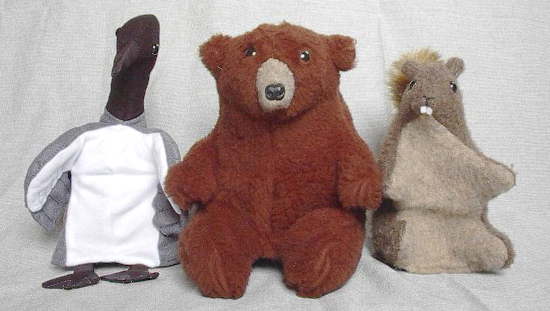
  • I can do an awesome squirrel voice. This comes in handy for the above-mentioned storytelling hobby and the many puppet shows I conduct for kids as a park naturalist.

    My squirrel voice was first developed for the puppet on the right, but has since been used while impersonating a variety of rodent characters.
    My squirrel voice was first developed for the puppet on the right, but has since been used while impersonating a variety of rodent characters. (Oh, and I also hand-sewed these three puppets.)
  • Weather fascinates me. Ever since I spotted a twister that came within ½ mile of my house as a child, I have been interested in weather. I have the National Weather Service radar bookmarked on my computer and could watch clouds all day. I was bummed that all my hospital room windows faced east when I was stuck there during my UC and surgery recovery. It drove me crazy to not be able to see the weather coming in from the west.
  • Social media wears me out. Though I enjoy public speaking and teaching, I am a total introvert at heart. I am the person at parties who you see having an in-depth conversation with someone in the corner instead of mingling. In the same way, I love interacting with people one and one through blog comments and emails. However, I definitely fall short in the realm of social media. The pace of Facebook and Twitter is crazy and by the time I process all the information and think of what I want to say, posts are already dead and buried. And I find writing within the 140 character limit of Twitter nearly impossible!
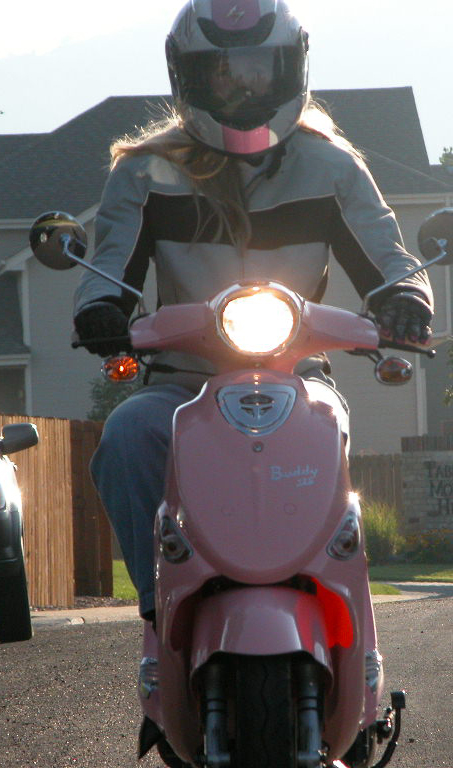
  • I drive a pink scooter. In an effort to keep my carbon footprint as small as possible, I make my 28-mile round-trip commute on my scooter when the weather cooperates (my bike gets 90-95 mpg). With my pink helmet and blond ponytail, I must look like Barbie going down the street because I often get waved to by little girls.
Heading to work on my scooter.
  • I love gummy candy. I try to eat healthy, but I have weakness for gummy bears, octopi, worms or whatever crazy-shaped creations I can find in the candy aisle.
  • I was a really creative kid. When I was a child, my parents set up art studios in the basement for my brothers and I, and stocked them with markers, paints, papers and all sorts of materials. I would spend hours down there drawing and creating art projects. I also used to develop my very own book order forms for my parents to fill out. Once they marked which titles they wanted, I would make little books and write a tale within the pages so that I could fill their order. My brothers and I also used to type up scripts and song sheets for shows and then perform them for our family.
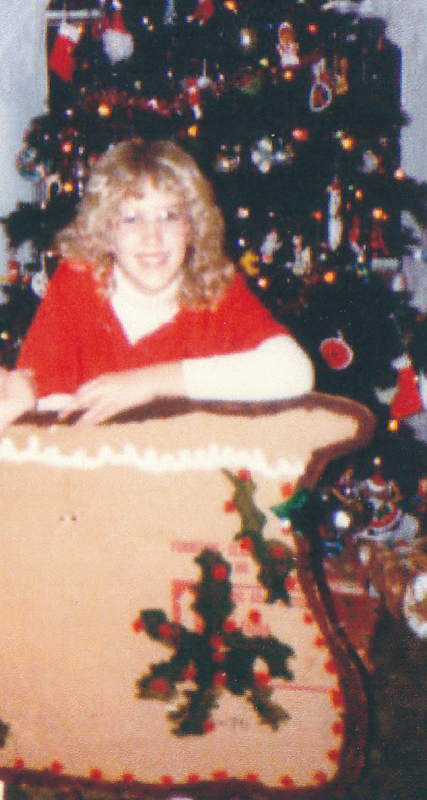
Sitting in my homemade cardboard sleigh during a one of our Christmas productions.
Sitting in the homemade cardboard sleigh during act one of a Christmas production.
Act two involved some singing complete with a microphone. Now if only I actually could have carried a tune!
Act two involved singing in an elf costume (with a cool microphone)! Now if only I could have actually carried a tune.

Back in the wilds!

Heart pounding, quads burning and lungs barely able to keep up — I could not believe I was standing at 13,000 feet again. Yet there I was! Doug and I spent the weekend in Breckenridge with his parents. Our rental was a mere two miles from the Quandary Peak trailhead, so yesterday we decided to head up the trail to see how far we could get.

Doug and I take a break along the Quandary Peak trail.

I had no intentions of making the summit, and just wanted to be out in the mountains moving my body again. With the sudden onset of groin pain in mid-January and an MRI in February that showed gluteal tendinosis in my hip, I had been doing lots of physical therapy and taking a break from hiking. In fact, I was starting to think that my Rainier attempt in July might not happen. I tried to keep my fitness up with biking and swimming (doggie paddling really… I cannot do any overhead swimming strokes because it hurts my shoulder avascular necrosis (AVN) too much). However, those activities hardly replicated the intensity of climbing big peaks with heavy gear at altitude.

Fortunately, last week I got some good news at a much-anticipated appointment with a new orthopedic surgeon. After looking at my MRI, he didn’t see anything in my hip except for the gluteal tendinosis. However, he does not think that the tendinosis is causing the groin pain I have been experiencing because that type of injury typically causes outer hip soreness. This makes sense as the physical therapy I have been doing for the last two months has really helped some of the pain in the outside of my hip, but did little for the groin. The bottom line is that the doctor did not know what was causing the soreness in that part of  my hip; the joint looks healthy. He said sometimes they really can’t find anything and oftentimes these issues resolve on their own with time. He thought it was fine to start training for Rainier again as long as the pain didn’t worsen.

I also talked to him a lot about my shoulder AVN. Though I really liked working with the doctor that diagnosed the condition back in December, this particular orthopedic surgeon has more experience working with patients who have AVN. After looking at my MRI, he felt the AVN in my shoulder may not cause me any further issues. He said the necrotic area is small and that most of the cases he has dealt with have involved a much larger percentage of the humeral head. As a result, it is quite possible that I won’t ever need a joint replacement. Of course, he did say the exact progression is impossible to predict. The doctor said I was really, really lucky that I have not developed AVN in my hip. He has never had a patient that had it in the shoulder that did not also have it in the hip. (Could I be this lucky?!) Though he said it is always possible to develop AVN in another joint at any time down the line, the more time that passes after taking steroids, the better the chance is that this won’t happen. He mentioned that there are a lot of factors at play with steroid-induced AVN that doctors don’t understand. For instance, the window of time for developing AVN after stopping steroids appears to be a lot longer for some people and with some diseases than others.

It was a huge relief leaving the doctor’s office knowing that I had just been given the okay to get back to all my activities. And with my shoulder also feeling so much better, I happily started planning all my new adventures.

Unfortunately, my body wasn’t quite ready to cooperate. The morning after my appointment, I was bending over to pick something up off the floor and I felt a pull in my Achilles tendon. I was so disappointed. I had waited so long for that appointment with the new orthopedist and now I had developed an entirely new issue less than 24 hours later! This is so typical for me. There were many times when I was recovering from ostomy surgery when I would tell my surgeon everything was great at an appointment and then have something go wrong the following day.

Luckily, I had an appointment with my physical therapist that evening so I could at least discuss my latest joint woe with someone. He felt I had probably just strained the Achilles tendon a bit and gave me some stretches and strengthening exercises. Because my pain was minor, he thought I could still train as long as the movement of hiking didn’t irritate the tendon. Obviously if the issue starts to become more painful I will head back to the orthopedic doctor.

So, I wasn’t sure what to expect on the adventure yesterday. Much to my surprise, I felt great and ended up hiking around 5 miles round trip with a couple thousand feet elevation gain, making it to the 13,000′ shoulder of Quandary Peak. My Achilles did not hurt and my hip felt okay. A few times along the way I just stopped and listened to the beautiful sounds of being on a remote mountainside again. I could hear the wind in the tree branches and the snow crystals hitting my jacket and it felt amazing to be out there. I actually pinched myself a couple of times to make sure it wasn’t a dream. The feeling of happiness felt so similar to those first wilderness hikes after my ostomy surgery when I realized that I would still be able to do an activity I loved so much.

Returning from a post-lunch ostomy pouch swap. With the deep snow, I use closed-end pouches instead of drainables and then pack out the full one.
Returning from a post-lunch ostomy pouch swap. With the deep snow, I use closed-end pouches instead of drainables and then packed out the full ones.
Nope. I am not dreaming and pinch myself just to make sure!
Nope. I was not dreaming and I pinched myself just to make sure!
We reached a high point of 13,000' on the shoulder of Quandary Peak. The summit can be seen in the distance.
We reached a high point of 13,000′ on the shoulder of Quandary Peak just as another snow squall came in. The summit can be seen in the distance.

I look forward to the many mountain trips on the horizon as I start to train for Rainier again. If If I end up not summiting the big peak due to all the recent training hiccups, I will be okay with that. If the fun I had today is any indication, just being on that massive and beautiful mountain is going to be a breathtaking experience in and of itself.

Relaxing in the hot tub after our hike with a perfect view of the peak.

Using Duoderm to protect peristomal skin

What’s a mountain girl to write about when my hip injury is keeping me from the slopes and summits? Skin care, of course! After all, taking care of your peristomal skin is of utmost importance. It is hard to enjoy outdoor sports if your skin is irritated and painful or if your appliance won’t stick to weepy, damaged areas.

My stoma is fairly long at 1.5″and doesn’t have the best posture. It flops downward and a bit to the right — especially under the weight of my clothing and pouch. This actually  works great because my output goes toward the bottom of my pouch which helps prevent leaks. On the downside, the area of skin just under my stoma sometimes gets irritated because stool tends to collect in that spot. Also, as my stoma flops down, it compresses my Eakin barrier ring in that area and causes it to erode more quickly. Fortunately, I discovered a great solution to this problem soon after surgery thanks to the help of my home health nurse.

When I don't protect the skin underneath the area where my stoma flops over, I get a strip of irritation.
When I don’t protect the skin underneath the area where my stoma flops over, I get a strip of irritation.

There was a six-week time period after my surgery during which I had a complication with my mid-line abdominal incision (due to a rare reaction to sutures). I ended up having to leave the wound open for healing with the help of a wound vac. While this was certainly a disappointment at the time, the situation also held a hidden blessing. Every other day, a home health nurse would come and change the sponge dressing for my wound vac. In order to do this, my ostomy wafer had to be removed and replaced each time. Along with being a wound vac guru, my home health nurse also had a great knowledge of ostomy skin care. Having the nurse watch and help me change my appliance so frequently over a period of many weeks provided an amazing opportunity to practice the task and troubleshoot problems. As time progressed, my nurse saw that a sliver of skin under my stoma was consistently raw.  She told me that this would likely become a chronic issue unless I did something to better protect that section of skin. I was already using Eakin barrier rings, so she suggested I add a product called Duoderm Signal to my ostomy system.

Duoderm Signal comes in a 4″ x 4″ sheet and custom-sized pieces can be cut out of it to cover whatever area needs protection. To care for the sliver of skin right under my stoma, I cut a 1/2″ by  1″ comma-shaped piece that contours with the edge of my stoma. When I place it on my skin in the trouble spot, it provides a much needed extra layer of protection. When my Eakin barrier ring erodes a little sooner in that section, my output touches the Duoderm layer instead of my skin.

Duoderm can be placed right on the skin, but it does not adhere well if the area is wet. Therefore, if I get irritation that is weepy,  I must put a layer of stoma powder and skin prep under the Duoderm in order for it to stick. The best way to do this is to use the “crusting” method. First I put a small bit of powder on the sliver of skin that is irritated. I then dab it with 3M Cavillon Skin Prep. Once it dries, I add one more layer of stoma powder and one more layer of Cavillon. I give the area a final dry with a hair dryer on a low setting for a few seconds. Then, I add the strip of Duoderm over the crusted area. Finally, I put my Eakin barrier ring over the Duoderm followed by my wafer.

This method works wonderfully to protect the skin under my stoma. However, I can’t stretch wafer changes longer than four days when using the Duoderm. If I do, the Duoderm will start to peel up from being so close to my wet stoma. Then output starts to seep under it and cause skin breakdown.

If I develop a sore under my stoma, I put a layer of stoma powder just on the tiny sliver of irritated skin. I then dab the powder with Cavilllon skin prep to form a seal over it. Once dry, I add one more layer of stoma powder followed by one more layer of Cavillon skin prep. This forms a "crust" over the sore that the Duoderm can stick to. The stoma powder also helps heal the sore.
If I develop a sore under my stoma, I put a layer of stoma powder just on the tiny sliver of irritated skin. I then dab the powder with Cavilllon skin prep to form a seal over it. Once dry, I add one more layer of stoma powder followed by one more layer of Cavillon skin prep. This forms a “crust” over the sore that the Duoderm can stick to. The stoma powder also helps heal the sore.
A small piece of Duoderm Signal adds another layer of protection for my skin. I put the Duoderm under my Eakin barrier ring. Both of these things then go under my wafer.
A small piece of Duoderm Signal adds another layer of protection for my skin. I place it right on top of the stoma powder/Cavillon skin prep “crust” in the photo above. If I happen to not have a weepy sore and just want to protect the skin, I skip the powder and Cavillon step and place the Duoderm right on my skin.
I place my Eakin barrier ring over the Duoderm. You can see the Duoderm peeking out in this photo.
I place my Eakin barrier ring over the Duoderm. You can see the Duoderm peeking out towards the bottom of the ring in this photo.
The Duoderm and Eakin barrier ring protect the trouble spot beautifully and help me maintain healthy paristomal skin. As long as I put the Duoderm on at every change, I rarely get a sore anymore unless some output happens to seep under the Duoderm. In these cases, the layer of stoma powder and Cavillon mentioned above clears it up by the my next change.
The Duoderm and Eakin barrier ring protect the trouble spot beautifully and help me maintain healthy peristomal skin. As long as I put the Duoderm on at every change, I rarely get a sore anymore unless some output happens to seep under the Duoderm. In these cases, the layers of stoma powder and Cavillon mentioned above clear it up by my next change.

Some people with ostomies are lucky enough to be able to stick their wafer right to their skin with no additional products. Unfortunately, that does not work for me. I need to build up several layers of things in order to maintain healthy skin. As soon as I try going back to more simple methods, my skin suffers. Appliance changes typically take me over 45 minutes if I include the time it takes to set up my materials, remove my old appliance, shower and do all the steps to get my new wafer on well. I never worry about it. It is not a race. Having my appliance off for a little while actually helps my skin get some fresh air. Between eating about five marshmallow prior to my change to slow down my output, and then wrapping paper towel strips around my stoma to catch any stool that might come out as I work, things go fairly smoothly when having my appliance off for that long. Of course there are always those days when my stoma doesn’t cooperate! Still, even with the occasional mishap, taking the extra time needed to better protect the skin around my stoma is worth it. Having happy skin helps me feel good about my ostomy and gives me confidence that my appliance will adhere well through all my adventures.

I do have one more skin care tip that I use which involves using both an Eakin ring and stoma paste, but that will have to wait for a future post!

Back to the GI doctor’s office

Monday I found myself in a place that I hadn’t been to for a very long time: my GI doctor’s office. After having permanent ileostomy surgery for my UC, I wasn’t sure if I would ever need to be seen there again. However, for the past ten months, I have had canker sore-like ulcers show up on my stoma off and on in different places. I actually noticed the very first of these ulcers while changing my appliance on a backpacking trip last June. I remember calling for Doug through the woods so he could come snap a photo of it. I think he thought I was being cornered by a bear! (joking)

That ulcer was rather deep, and after showing a photo of it to my surgeon, he thought it might be trauma-related and caused by a nick in my stoma. It healed up in a few weeks, and I thought that was that. However, in the autumn I got a couple more ulcers, and since that time, I have had more of them show up and at more frequent intervals. In fact, I have a new one today. The ulcers heal quickly (sometimes too quickly– it is hard to time an appointment with my doctor when they are actually there) and don’t seem to cause any problems. Because the ulcers are a recurring issue, I shared more photos of them with my surgeon and he suggested I have them further investigated at my GI doctor’s office.

I have an awesome GI doctor, but for much of my life with ulcerative colitis, I worked with an equally amazing IBD nurse practitioner. When you have chronic conditions and end up seeing your doctors and nurses again and again, you can really develop a strong and trusting bond with them. My nurse practitioner is a very caring individual and she has worked with me during my worst UC moments. I hadn’t seen her since I was extremely ill and lying in a hospital bed during my final severe UC flare two and a half years ago. It was great seeing her again under much better health! Of course, last week’s ulcers had conveniently healed just in time for the appointment, so I once again had to rely on photos of the ulcers to explain what was going on. Thank goodness Doug is a stoma portrait photographer extraordinaire and we have been documenting the ulcer activity pictorially for months.

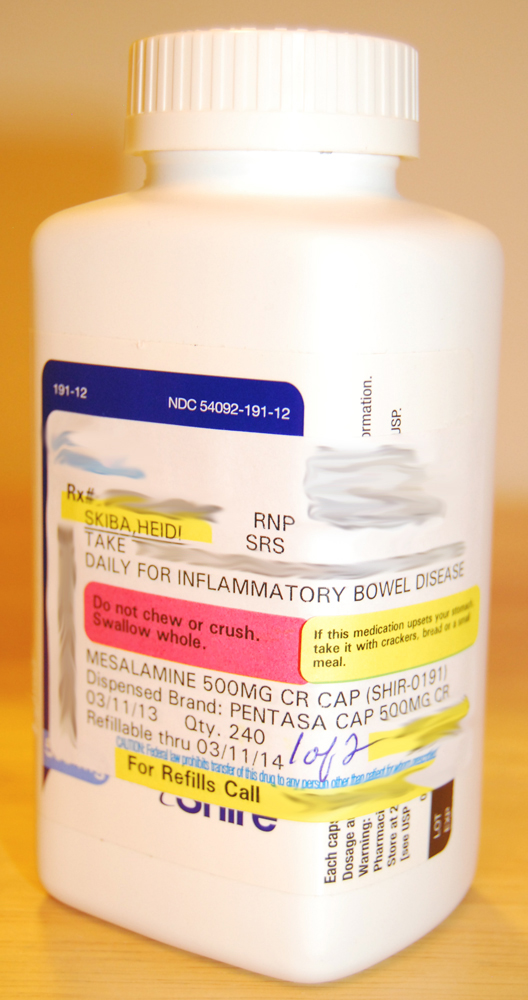
After looking at the photos, my nurse felt that the ulcers could be a sign of active IBD. She didn’t call it Crohn’s disease, but said that the ulcers are likely caused by the same inflammation process involved in IBD in general. She talked about how many different genetic factors are showing up in research related to IBD. What is thought of as Crohn’s or ulcerative colitis could actually be a group of different diseases which makes things hard to pinpoint in some cases. (This is my recollection of what she said anyway… I am not the best at explaining medical stuff from memory.) Regardless of the name, the suggested treatment for me was the same: a low dose of Pentasa to see if it helped resolve the ulcers. If the drug does resolve the ulcers, it would be a sign that I am dealing with IBD. If  the ulcers would actually cooperate and show up when I am scheduled for an appointment, I could also get them biopsied to provide a more definitive diagnosis. There is also a possibility that the ulcers could be caused by a virus, but that is less likely due to the recurring nature and how long I have been experiencing them. All in all though, this is a really minor thing. The ulcers seem confined to just my stoma, no other symptoms come with them, and I feel great. My inflammatory markers were fine as well. My nurse said stoma ulcers do happen for many people without progressing up the intestines. That was great news to hear.

When I was sitting in the pharmacy waiting to have the prescription filled, I found myself reflecting on the possibility that my disease was returning– even if only mildly. The weird thing was– I was not worried about it at all. I always thought that finding out my IBD might be back would be terrible news. I would have expected to be scared, disappointed or something along those lines. However, now that I was actually facing that possibility, all I felt was a sense of calm. For someone who has been plagued by anxiety lately, this new found feeling of peace was refreshing.

I didn't expect to read "for inflammatory bowel disease" on a medication label again!
I didn’t expect to read “for inflammatory bowel disease” on a medication label again.

I really can’t put my finger on the one thing that has led to this new outlook. Be it bones or intestines, I am discovering that I am far less worried about my medical issues lately– so much so that I was able to stop taking anti-anxiety meds over a month ago. I went to see a counselor and also went to some anxiety management group sessions which have helped me look at things in a new way. My mindfulness meditation practice has been important in helping me focus on the present too. The positive thoughts and prayers sent by family and friends have also been paramount. I have also been more in touch with my spiritual side which has brought peace.

Another big source of comfort is knowing that I have been blessed with some of the most incredibly kind and skilled doctors and nurses on the planet. Not a day goes by when I don’t think about how grateful I am that everything somehow came together to have each of these individuals on my healthcare team. I know they truly care about my well-being. I can relax knowing that if things should get worse with any of my health conditions, I am in really good hands.

Overall, if I had to sum up the reason I am feeling so good about things lately in one word it would be this: trust.

I trust that I am strong enough to get through anything. I trust that my family and friends will be there to lean on. I trust that my medical team will do their absolute best to take good care of me. I trust that I will always be able to help others by sharing my experiences. And I trust that whatever path I find myself on, I will make it the best journey possible.

Reaching out (feat. new video)

Last Tuesday evening, I left work in a gorgeous swirl of falling snow but promptly got stuck in standstill traffic due to slippery road conditions. I half-thought of exiting the freeway and heading home, but the destination was too important and I knew that getting there would soon melt away any stress that had accumulated on the drive. In fact, it was almost guaranteed that I would leave the event in a good mood. I always do. So where was I heading that had me filled with such eager anticipation?

The fourth Tuesday of every month is my Ostomy Association of Metro Denver meeting. I started going to these meetings as soon as I was healed enough after surgery to get to them and quickly discovered how valuable they were. When you have a condition that is hard to talk about with most people, there is a feeling of instant comfort that comes from being surrounded by others who immediately understand what you are going through. A place where it is okay to talk about normally taboo subjects such as gas, rectums and bowel movements. Now that I have been attending the meetings for almost two years, I cannot imagine not having this support system in my life. I absolutely love talking to those who are facing or recovering from surgery and doing what I can to offer encouragement. I head home from every gathering wishing I had more time to talk to everyone and eager for next month’s meeting to arrive.

One thing that I hear many young people on IBD and ostomy internet forums say is how they often walk into such meetings and feel that they are the only one in their age group there. Many times these people don’t come back for this reason, and I think it is really unfortunate. Regardless of age, everyone can relate to the overwhelming emotions that come with ostomy surgery. Though different for each person, we all have stories of difficult times, fears we are facing, successes we are celebrating and hopes and dreams for our lives beyond illness. Coming together to share our experiences and thoughts on these things can offer profound opportunities for healing. I love the conversations I have at the meetings and learn something from every single person there whether they are 25 or 70 years old.

And guess what? If you wish that there were more people at the meetings your age– stick around. The next time someone else your age is nervously walking down the hall towards the meeting room and peeks in, they will see you there and feel less apprehensive. If that person chooses to also come back next time, it has a ripple effect and soon the group becomes more diverse. Make the meetings be what you want them to be by participating and returning for the next one.

If you don’t have access to a local support group to meet people in person, there are many groups to join on the internet. I wrote a post a while back about the importance of reaching out to others online. One of my biggest twists of luck when I was in the hospital and facing the possibility ostomy surgery was that my room had a good internet connection. Whenever my favorite nurse would see me typing away on my computer at an intense pace, she would always remind of how fortunate I was to be in that room because many of the others on the floor had poor Wi-Fi signals. I don’t know what I would have done without my computer. It became a lifeline from my isolated hospital room and allowed me to meet others who had gone through surgery and gone on to lead active lives.

Because of my own experience in reaching out for help when I was sick, it is a huge priority of mine to try to answer every single comment and email I receive on this site. Sometimes it takes me a little while due to a busy schedule, but you will hear from me if you write. Last fall, an email appeared in my box from another local adventurous ostomate: Lewis Benedict. That initial contact led to other opportunities to meet up including a recent hike of Twin Sisters Peaks in Rocky Mountain National Park. Lewis is now working on his own ostomy awareness website, ostomatevillage.com, and was even on cover of The Phoenix magazine this quarter! I am so proud of his accomplishments and look forward to many future adventures with Lewis and his wife, Tara.

On top of Twin Sisters Peak in Rocky Mountain National Park with Lewis and Tara of Ostmate Village. Check out the video below for more on the adventure!
Our group (including Lewis and Tara of Ostomatevillage.com) poses atop one of the Twin Sisters Peaks in Rocky Mountain National Park. Check out the video below for more on the adventure!

I am thankful everyday that I have met so many amazing people through my ostomy association meetings, OstomyOutdoors.com, and other websites and social media. You all inspire me to no end and help keep me motivated when my own life presents challenges.

I am going to end this post with a video of the hike with Lewis mentioned above. I hope it provides some inspiration to get out there and meet other people with ostomies. If you are feeling alone while facing or recovering from surgery, or if you just want to meet other people who have been through similar things, know that there is a strong ostomy community out there. You just have to reach out.

No more expecting the worst

When I woke up this morning, I had anticipated getting so much more done including writing a different blog entry than this; one that included a short new video. Instead, all I managed to check off my list was a physical therapy appointment, grocery shopping and a very messy appliance change with an uncooperative stoma which led to extra laundry and some other clean-up duties. So much for expectations!

One good unexpected thing that happened today was that I got my hip MRI results. I didn’t think I would find out what the test revealed until tomorrow. My primary care doctor told me that the radiology report showed some tendinosis in the joint, but no avascular necrosis. Before I throw a huge party, she does want my orthopedic doctor to also look at the MRI to make sure he concurs with the findings. Still, I am hugely relieved by the news as I would think it would be pretty unlikely that something wasn’t caught in the MRI.

I realize through all my recent hip pain woes,  I was hoping for the best, but preparing for and anticipating the worst. The pain in my hip has felt exactly like the AVN in my shoulder and I was really dreading getting the MRI results because I was almost certain they would say that I had developed the disease in another joint. Every research study I could find on steroid-induced shoulder AVN said that it was common for  it to also show up in the hip joint. How could my worsening hip pain not be caused by AVN? It seemed like a given and yet it turns out this is not the problem. The ironic thing is that I originally thought my shoulder issue was tendonitis and it ended up being AVN.  Now I was sure the hip problem had to be AVN, and here it is likely tendonitis!  Again, so much for expectations.

More and more I am finding that trying to anticipate what is going to happen with my health conditions is completely futile. I have always found it to be very important to research my health issues in order to make the best decisions possible regarding treatment options, but at some point I have also found it necessary to surrender to the many unknowns and simply put my trust in my doctors.

I have come across so many stories of people whose AVN has been missed in tests, so of course I start to wonder if that could end up being me. However, it makes me miserable to constantly speculate over whether or not things are being treated correctly, or whether or not I am doing absolutely everything I can to control the outcome of a disease. I went through this with my ulcerative colitis. There was always one more opinion I should get… one more diet I should go on… one more try this.  Eventually all that wondering just got to be too much for me. I am at that point with the avascular necrosis. My biggest hope right now is to simply find a doctor I am comfortable with for this condition. I have an appointment with another orthopedic doctor soon who was highly recommended to me to get another take on my AVN case, but once I consult with him, I am going to ride this out and see what happens.

From now on, instead of hoping for the best, but expecting the worst, I am going to try to hope for the best and trust that everything will somehow work out.